
Hip topic
Total Hip Replacement and Physical Therapy
Hip joint replacement is surgery that replaces all or part of the hip joint with a man-made joint. A partial replacement, called hemiarthroplasty, replaces only the ball of the joint.
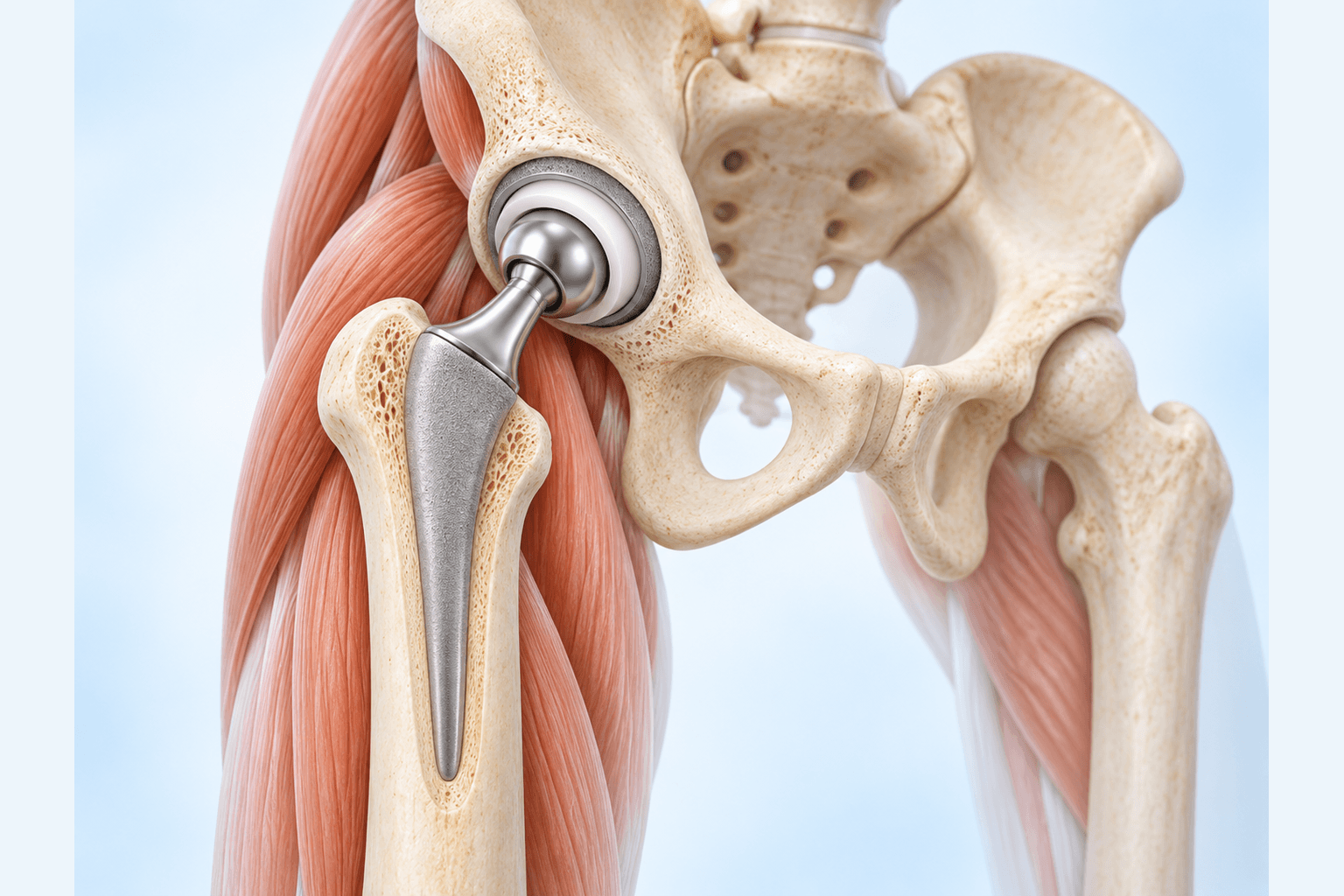
- Cup and linerThese components sit in the hip socket.
- Ball and neckThese connect the socket side to the stem.
- Femoral stemThe stem sits inside the upper thigh bone.
Why it is done
Arthritis is the main reason. Other reasons include fractures of the thigh bone and hip joint, and tumors of the hip joint.
The surgery removes damaged bone and cartilage. It is done for severe arthritis or a hip fracture when more conservative treatments are not effective, and most often in adults aged 60 to 80.
Replacement may be recommended when pain keeps you from sleeping or from normal activities, or has not improved with other treatment.
Before and after surgery
Here is how Physical Therapy may fit around the operation.
Before surgery
- A visit to a physical therapist before surgery can cover exercises to do beforehand and practice with crutches or a walker.
- Exercises can condition your body, including flexibility and strengthening for the legs.
- Home changes, such as a raised toilet seat, stair handrails and a bed rail, can help.
After surgery
- The hospital stay is usually 1 to 3 days, and you are asked to start moving and walking as soon as the first day. Some people spend a short time in a rehabilitation center before going home.
- A physical therapist may see you at the bedside on the first or second day.
- For the first 3 to 5 days, you practice turning in bed, sitting up, standing, short walks with a device, gentle motion and strengthening.
- The weight you may put on the leg ranges from a toe touch to as much as you can tolerate.
- Later work includes walking, stairs, balance, moving between lying, sitting and standing, full leg movement and strengthening.
- In outpatient Physical Therapy, motion and stretching continue and shift toward goals tied to activities such as work or sport. Physical Therapy continues for a number of weeks.
Your surgeon will tell you which hip movements to avoid and for how long.
Risks to know about
Like any operation, hip replacement has risks, including infection, loosening or dislocation of the new joint. Your surgeon will go through them with you.
What an evaluation may look at
An evaluation may look at:
- How you move and walk.
- Your balance.
- How you manage stairs and moving between lying, sitting and standing.
- Hip motion and strength.
How Physical Therapy may fit
A Shanti physical therapist begins with an evaluation. If Physical Therapy looks like a good fit, the plan is built around what the evaluation shows. Depending on the findings, a plan may use some, all or none of these approaches:
Safety note
When to seek medical care
Seek urgent medical care after a serious injury if you cannot put weight on the leg, or if the leg or joint looks deformed. Contact a medical professional for severe or worsening symptoms, fever, or concerns after an operation.
See the full safety checklist
When to get medical care first
Get emergency care right away if:
- you have had a serious fall or injury;
- your leg looks deformed, badly bruised or bleeding;
- you cannot move the hip or put weight on it; or
- worsening hip pain comes with trouble urinating or having a bowel movement.
Contact your surgeon or another medical professional promptly about any concern after your operation.
- Ask your surgeon which signs to watch for after your operation.
If you are unsure what is causing your symptoms, ask a medical professional. Information online is not a diagnosis.
Request an appointment
Send a request and we will contact you by the next business day. Submitting a request does not confirm an appointment; your appointment is confirmed only after the clinic responds.