
Hip guide
Hip Pain and Physical Therapy
Hip pain can start in the hip joint, in the tissue around it, or in the back. This page explains where hip pain is often felt, what a Physical Therapy evaluation may look at, when to get medical care first and where to read next.
Find your topic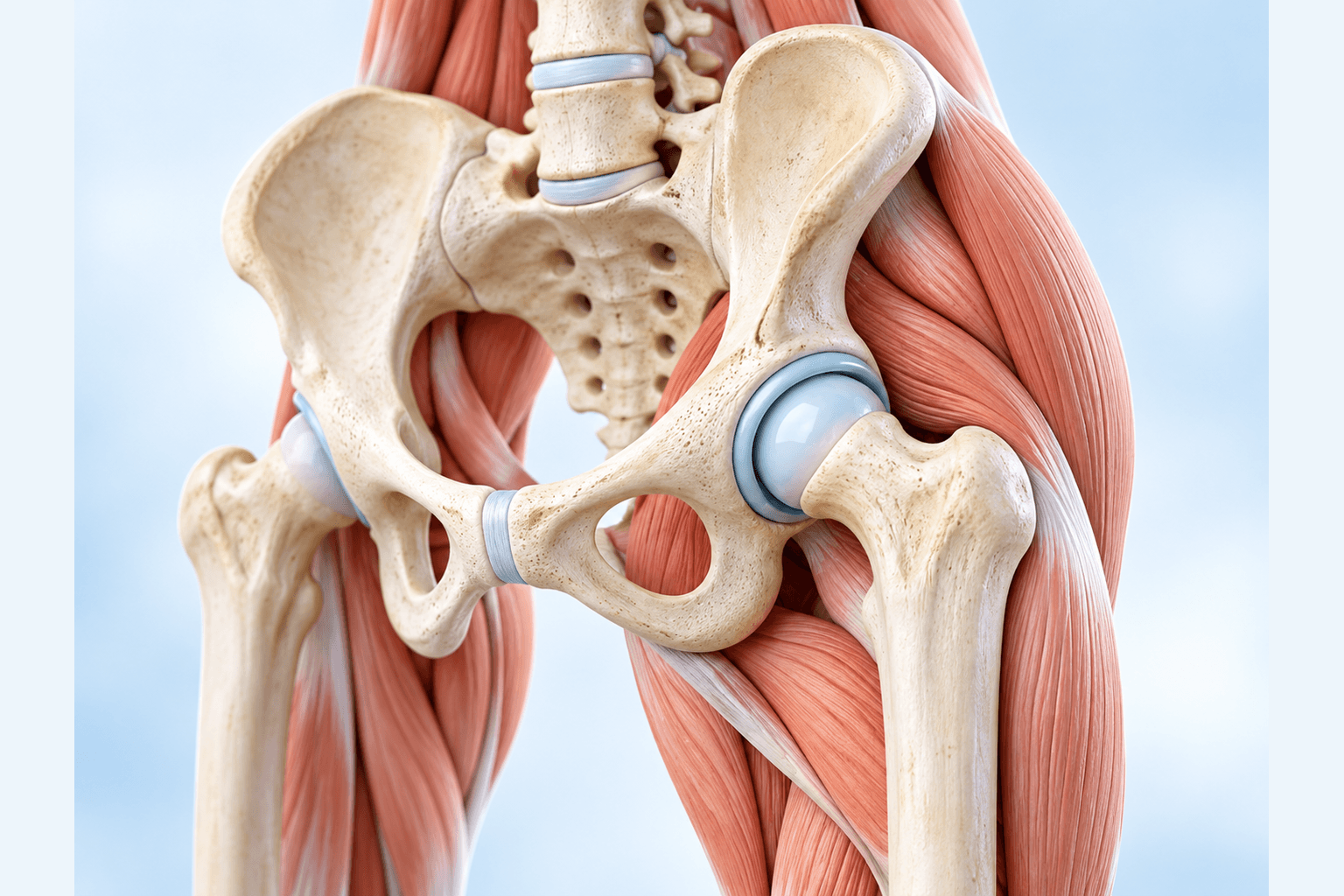
- Hip socketThe socket is part of the pelvis.
- Femoral headThe rounded top of the thigh bone forms the ball.
- Upper femurThe thigh bone continues below the joint.
Hip + knee guide
Not sure which area to start with?
A physical therapist may look at the hip, knee and nearby areas together. The combined guide explains why.
Start with what feels closest
Find your topic
You do not need to know the diagnosis before choosing a page.
- Pain at the outside of the hipHip bursitisPain on the outside of the hip, also called greater trochanteric pain syndrome.
- Outer-hip tendon painGluteal tendinopathyChanges in the gluteal tendons that may be linked with pain and weakness at the outside of the hip.
- Groin pain or stiffnessHip osteoarthritisChanges in and around the joint that can bring pain in the hip or groin, and stiffness.
- Planning for or returning from surgeryTotal hip replacementSurgery that replaces all or part of the hip joint, and where Physical Therapy may fit.
Other names you may meet
Other names you may meet
Other causes of hip pain include:
- Labral tear
- Femoroacetabular impingement
- Snapping hip syndrome
- Iliotibial band syndrome
Hip fracture. A break in the hip or upper thigh bone that needs medical care.
Where people often feel it
Hip pain can come from the hip joint itself or from the tissue around it. It can also be felt in the hip when the problem is in the back.
Groin or front of the hip
Pain from a problem in the hip joint itself is often felt most in the groin.
Outside of the hip
Pain on the outside of the hip is known as greater trochanteric pain syndrome. Read more on hip bursitis.
Where you feel pain does not tell you what is causing it. That takes an evaluation.
After you choose a topic
What an evaluation may look at
An evaluation may include:
- A history, and questions about your symptoms.
- Watching you walk, step onto a stair, squat or balance on one leg.
- Tests of hip motion, strength, walking and balance.
How Physical Therapy may fit
A Shanti physical therapist begins with an evaluation. If Physical Therapy looks like a good fit, the plan is built around what the evaluation shows. Depending on the findings, a plan may use some, all or none of these approaches:
Safety note
When to seek medical care
Seek urgent medical care after a serious injury if you cannot put weight on the leg, or if the leg or joint looks deformed. Contact a medical professional for severe or worsening symptoms, fever, or concerns after an operation.
See the full safety checklist
When to get medical care first
Get emergency care right away if:
- you have had a serious fall or injury;
- your leg looks deformed, badly bruised or bleeding;
- you cannot move the hip or put weight on it; or
- worsening hip pain comes with trouble urinating or having a bowel movement.
Contact a medical professional if:
- hip pain continues after 1 week of home treatment;
- you also have a fever or rash;
- hip pain starts suddenly and you have sickle cell anemia or take steroids for a long time;
- both hips and other joints hurt; or
- you start limping or have trouble with stairs or walking.
If you are unsure what is causing your symptoms, ask a medical professional. Information online is not a diagnosis.
Ask about an appointment
Send a request and the clinic will contact you to discuss the next step.
Edison
East Windsor
How a request works
- Open and send your emailShare your name, email, cell phone, your preferred clinic and when you are generally free. The form opens a draft in your own email app. Review it and send it from your mail app yourself; the website does not send it. Please leave out symptoms, diagnoses and insurance details.
- We contact youWe will contact you by the next business day, by phone, text or email, whichever you prefer.
- The clinic confirms itYour appointment is confirmed only after the clinic responds and agrees a time with you.
Submitting a request does not confirm an appointment. Your appointment is confirmed only after the clinic responds.