
Outer hip topic
Gluteal Tendinopathy
The gluteal tendons attach muscles in the buttock to the outside of the hip. Changes in these tendons that are linked with pain and weakness are called gluteal tendinopathy.
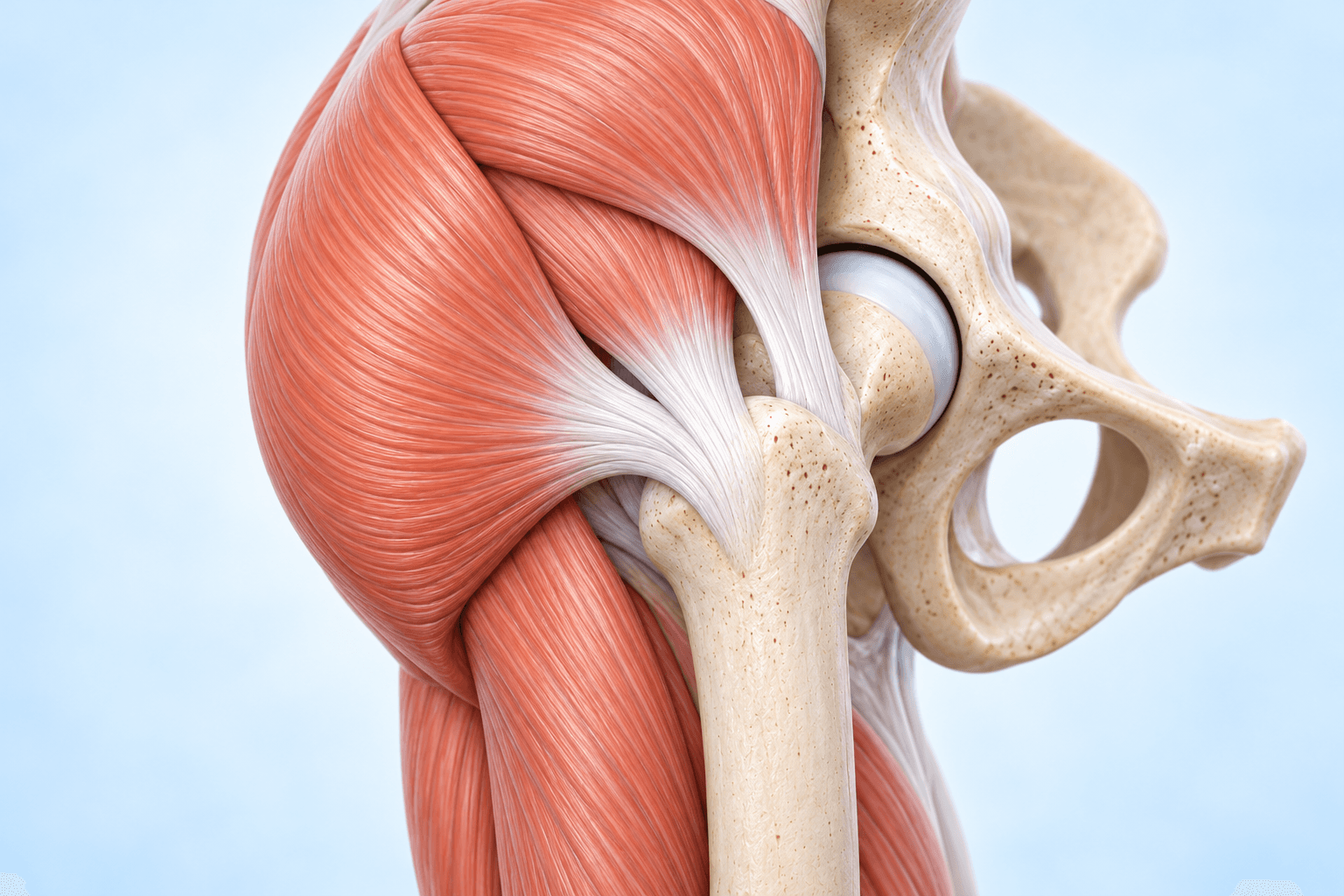
- Gluteal musclesThese muscles form much of the side of the hip.
- Gluteal tendonsThe pale tendons connect the muscles to bone.
- Greater trochanterThis is the bony point at the outer upper femur.
What it is
It sits within the broader group of outer-hip problems called greater trochanteric pain syndrome.
What people may notice
Pain is usually felt over the outside of the hip. It can overlap with bursitis and with pain referred from the back, so an evaluation matters.
- Tenderness when the outside of the hip is touched
- Pain when lying on that side or standing on one leg
- Pain when rising from a chair, walking uphill or using stairs
What may affect tendon load
- A sudden increase or decrease in usual activity
- Reduced strength or control around the hip and pelvis
- Positions or movement habits that repeatedly compress the outer-hip tendons
- Other hip, back or general health factors
What Physical Therapy may involve
A plan is based on the evaluation. Depending on the findings, it may include some, all or none of the following:
- Education about positions and activities that increase tendon load or compression
- A gradual exercise plan matched to current function and irritability
- Strength and movement work for the muscles around the hips and pelvis
- Guidance for modifying and gradually returning to work, leisure or exercise
What an evaluation may look at
- Your history, sleep, daily activities and recent changes in activity
- The exact area of tenderness and the movements that reproduce symptoms
- Walking, stairs, rising from a chair and standing on one leg
- Hip and pelvic movement, strength and control
How Physical Therapy may fit
A Shanti physical therapist begins with an evaluation. If Physical Therapy looks like a good fit, the plan is built around what the evaluation shows. Depending on the findings, a plan may use some, all or none of these approaches:
Safety note
When to seek medical care
Seek urgent medical care after a serious injury if you cannot put weight on the leg, or if the leg or joint looks deformed. Contact a medical professional for severe or worsening symptoms, fever, or concerns after an operation.
See the full safety checklist
When to get medical care first
Get emergency care right away if:
- Severe hip pain follows a fall or other major injury
- You cannot stand or put weight through the leg
Contact a medical professional if:
- You also have a fever or rash
- Pain is worsening, repeatedly returning or interfering with sleep and normal activity
- You have unexplained symptoms or are unsure whether the pain is coming from the hip or back
If you are unsure what is causing your symptoms, ask a medical professional. Information online is not a diagnosis.
Request an appointment
Send a request and we will contact you by the next business day. Submitting a request does not confirm an appointment; your appointment is confirmed only after the clinic responds.