Balance
Holding or recovering a position under an appropriate level of challenge.

Sense, plan, move, adjust
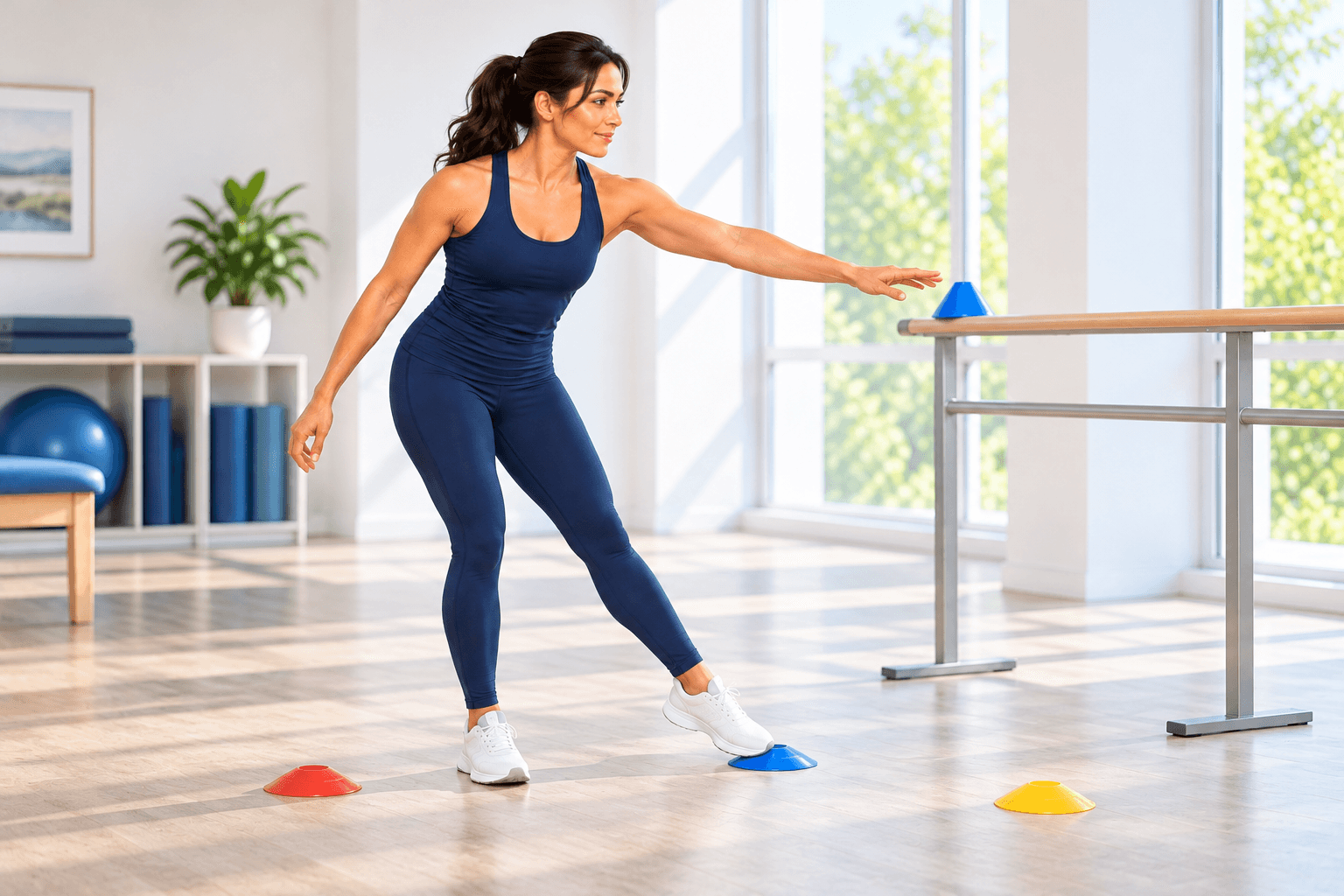
Neuromuscular re-education focuses on how movement is organized. Practice may target timing, coordination, balance, muscle activation, or control during a meaningful task.
Plain-language definition
The approach can use repeated movement, changes in position or surface, and visual, verbal, or hands-on feedback. The task starts at a level a person can practice safely and can change as control improves.
Inside the approach
The task should match the movement problem found during evaluation rather than follow one universal routine.
Holding or recovering a position under an appropriate level of challenge.
Organizing body parts together for a smoother task.
Practicing when a muscle group or movement should become active.
Applying the practice to standing, stepping, reaching, walking, or another activity.
A transparent visit
You should be able to understand the purpose of an approach, participate in the decision, and ask how your response changes the plan.
The therapist watches where balance, timing, or control becomes difficult.
The position, speed, support, or environment may be changed.
A cue, target, mirror, touch point, or repeated attempt may be used.
The task can become more similar to the activity you need to do.
Bring these questions
Tell us which clinic you prefer and how you would like the team to reply. The first visit begins with an evaluation, not a preset treatment menu.