
Knee guide
Knee Pain and Physical Therapy
Knee pain can come from disease, overuse or injury. This page groups the knee topics on this site, explains what a Physical Therapy evaluation may look at, says when to get medical care first and shows where to read next.
Find your topic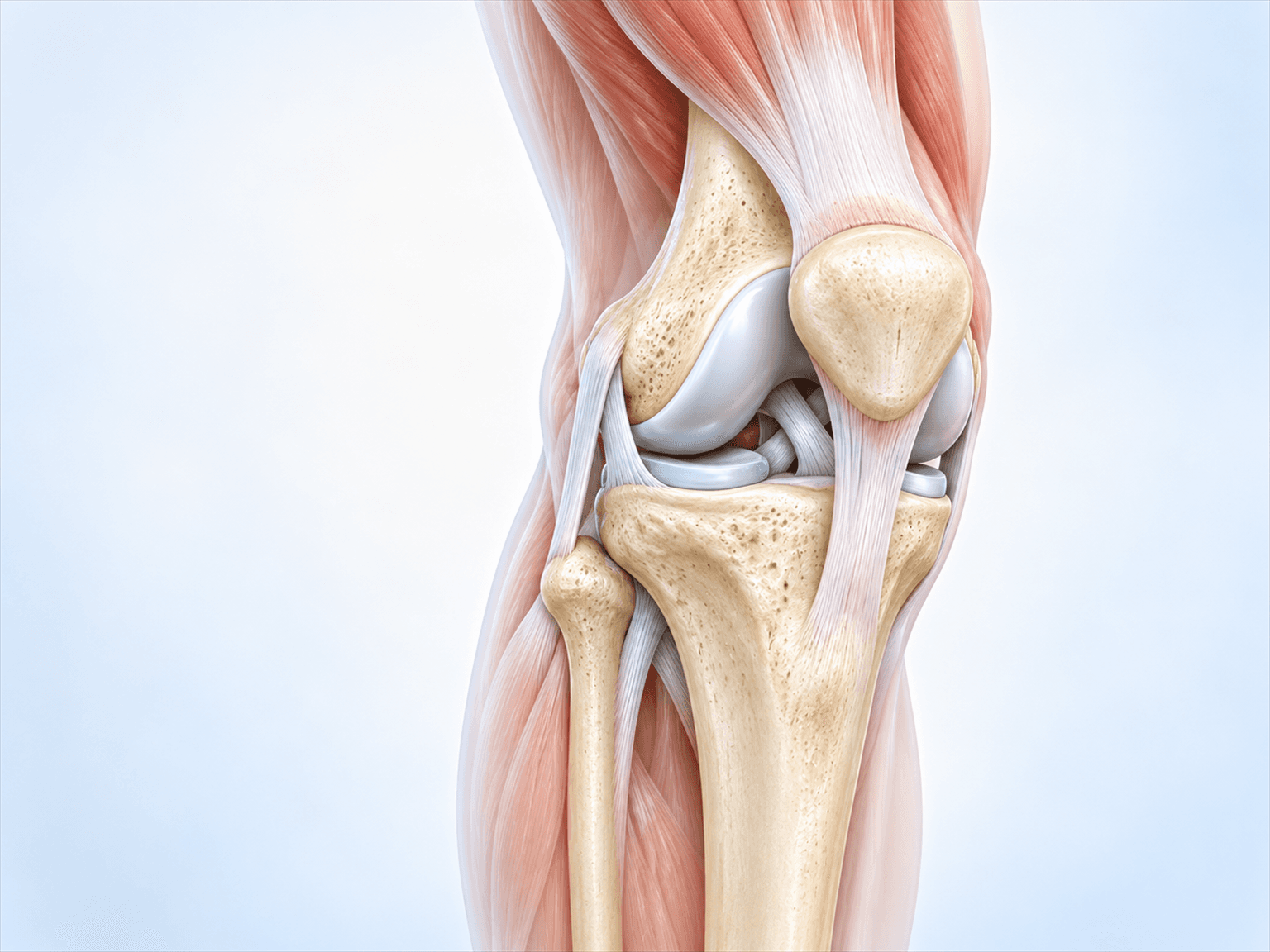
- KneecapThe patella sits at the front of the knee.
- Joint surfacesThe thigh bone and shin bone meet here.
- Shin boneThe tibia supports the knee from below.
Hip + knee guide
Not sure which area to start with?
A physical therapist may look at the hip, knee and nearby areas together. The combined guide explains why.
Choose the closest starting point
Find your topic
Start with how the problem began. These paths help you find the right page; they do not diagnose the cause.
Pain that builds
- Patellofemoral painPain under or around the kneecap, at the front of the knee.
- IT band syndromePain on the outside of the knee, linked to irritation of the iliotibial band.
- Knee osteoarthritisWear and tear of the cartilage in the knee joint, with pain and stiffness.
- Chondromalacia patellaA name for softening and breakdown of the cartilage under the kneecap.
An injury
These groups are for finding your way around, not for diagnosing anything.
What knee pain can look like
Knee pain can come from disease, an overuse injury or trauma. It can show up in different ways:
- It can be mild, or severe and sharp.
- It may come on suddenly or build from repeated strain.
- Swelling and a feeling that the knee might give way can come with it.
Overuse can bring on knee problems.
Names you may meet
Names you may meet
Other causes of knee pain include:
- Arthritis, of several types
- Baker cyst
- Bursitis
- Tendinitis
- Kneecap dislocation
- Fractures
- Iliotibial band syndrome
- Patellofemoral syndrome
- Torn ligaments
- Torn cartilage, called a meniscus tear
- Strains and sprains
- Infection
- Osgood-Schlatter disease
Chondromalacia patella is another name sometimes used for kneecap pain. Read more on chondromalacia patella or patellofemoral pain. Knowing these names does not tell you which one is behind your pain. That takes an evaluation.
What happens next
What an evaluation may look at
An evaluation may include:
- Watching you walk, use stairs, squat and balance on one leg.
- An exam of the knee and nearby areas, such as the low back, hip, thigh, ankle and foot.
- A look at whether limited movement in the hip, foot or ankle puts the knee at a disadvantage.
What a Physical Therapy program may include
Physical Therapy care starts with a rehabilitation program built for your condition. It may include:
- Education.
- Pain management.
- Work on how far the knee moves.
- Manual therapy, which is hands-on care.
- Strengthening.
- Functional training for everyday tasks.
- Braces or walking aids.
Physical Therapy before surgery can sometimes help, and after surgery a physical therapist builds a program for strength, movement and endurance.
How Physical Therapy may fit
A Shanti physical therapist begins with an evaluation. If Physical Therapy looks like a good fit, the plan is built around what the evaluation shows. Depending on the findings, a plan may use some, all or none of these approaches:
Safety note
When to seek medical care
Seek urgent medical care after a serious injury if you cannot put weight on the leg, or if the leg or joint looks deformed. Contact a medical professional for severe or worsening symptoms, fever, or concerns after an operation.
See the full safety checklist
When to get medical care first
Get emergency care right away if:
- you cannot put weight on the knee after an injury;
- your knee looks deformed;
- your calf or foot has numbness, tingling or a bluish color;
- your foot feels cool or looks blue after a knee injury. This can mean the knee has come out of joint, which is an emergency.
Contact a medical professional promptly if:
- your knee buckles, clicks or locks;
- your knee is still painful after 3 days of home treatment;
- the pain is severe;
- you have trouble bending or straightening the knee;
- you have a fever;
- your knee is red or warm;
- your knee is heavily swollen;
- your calf hurts or swells;
- an activity keeps bringing on knee pain. Get it checked before it gets worse.
If you are unsure what is causing your symptoms, ask a medical professional. Information online is not a diagnosis.
Ask about an appointment
Send a request and the clinic will contact you to discuss the next step.
Edison
East Windsor
How a request works
- Open and send your emailShare your name, email, cell phone, your preferred clinic and when you are generally free. The form opens a draft in your own email app. Review it and send it from your mail app yourself; the website does not send it. Please leave out symptoms, diagnoses and insurance details.
- We contact youWe will contact you by the next business day, by phone, text or email, whichever you prefer.
- The clinic confirms itYour appointment is confirmed only after the clinic responds and agrees a time with you.
Submitting a request does not confirm an appointment. Your appointment is confirmed only after the clinic responds.