
Pain that buildsKneecap topic
Chondromalacia Patella
Chondromalacia patella is a name for softening and breakdown of the cartilage on the underside of the kneecap.
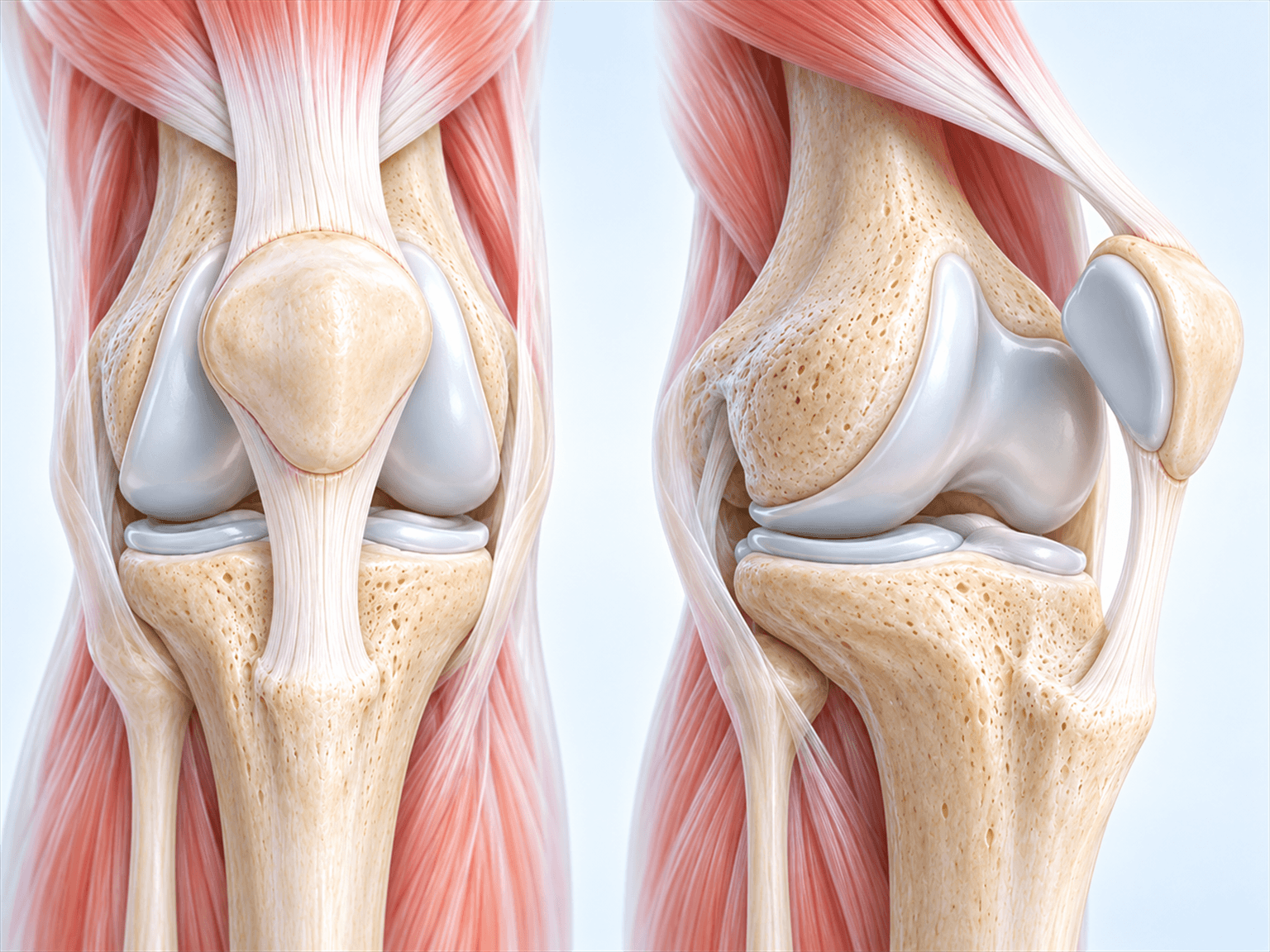
- KneecapThe patella sits at the front of the knee.
- Underside cartilageThe side view exposes the smooth back surface of the kneecap.
- Femoral grooveThe kneecap moves against this surface of the thigh bone.
What it is
Sources use it in two ways: for those cartilage changes, and as another name for patellofemoral pain, the pain under or around the kneecap.
This name is often used alongside patellofemoral pain. Read about patellofemoral pain
What people may notice
People usually describe a dull, aching pain behind or around the kneecap. It is often worse on stairs or after sitting for a long time.
- A dull, aching pain behind, below or beside the kneecap
- Pain on stairs, with deep knee bends or when standing up from a squat or after sitting
- A grating or grinding feeling when the knee bends
- Tenderness around the knee
What may be connected with it
- Overuse, such as running, jumping or skiing
- A kneecap that sits or moves out of its usual alignment
- Tight or weak thigh and core muscles
- Flat feet or an unusual alignment of the lower leg
- An earlier injury to the kneecap
What Physical Therapy may involve
A plan is based on the evaluation. Depending on the findings, it may include some, all or none of the following:
- Strengthening exercises for the muscles around the hip and knee, especially the thigh
- Stretching, such as for the hamstrings
- Practice with stairs, squatting, running or jumping movements
- Taping or shoe inserts alongside exercise when they fit the evaluation
- Guidance on changing activity and returning gradually to the activities that matter to you
What an evaluation may look at
- Your health history, and tests of the knee
- Which movements are painful, such as stairs and squatting, and whether another problem needs to be ruled out
- How you walk and run
- The strength of the hip and thigh muscles
How Physical Therapy may fit
A Shanti physical therapist begins with an evaluation. If Physical Therapy looks like a good fit, the plan is built around what the evaluation shows. Depending on the findings, a plan may use some, all or none of these approaches:
Safety note
When to seek medical care
Contact a medical professional if you notice any of the signs in the full safety checklist.
See the full safety checklist
When to get medical care first
Contact a medical professional if:
- You cannot put weight on the knee
- You have severe pain, even when not putting weight on the knee
- The knee buckles, clicks or locks
- The knee looks deformed or misshapen
- You cannot bend the knee or straighten it fully
- You have a fever, redness or warmth around the knee, or a lot of swelling
- The calf below the sore knee is painful, swollen, numb or tingling, or has a bluish color
- Knee pain does not go away, or continues despite home care
If you are unsure what is causing your symptoms, ask a medical professional. Information online is not a diagnosis.
Request an appointment
Send a request and we will contact you by the next business day. Submitting a request does not confirm an appointment; your appointment is confirmed only after the clinic responds.