
Shoulder topic 04
Shoulder Calcific Tendinopathy
Calcific tendinopathy—also called calcific tendonitis—is the name used when calcium deposits form within a rotator cuff tendon. Symptoms can overlap with other shoulder problems, so the name is tied to clinical assessment and imaging context.
Orientation
What may be discussed
A person with a calcific finding may report:
- Shoulder pain that came on suddenly or built gradually
- Pain with movement and reduced shoulder motion
- Pain that affects sleep
- Symptoms that resemble other rotator-cuff-related shoulder problems
A symptom list cannot confirm that a calcium deposit is the source of pain.
What the name means
A tendon finding with imaging context
The useful distinction is between the symptom, the tissue and the finding.
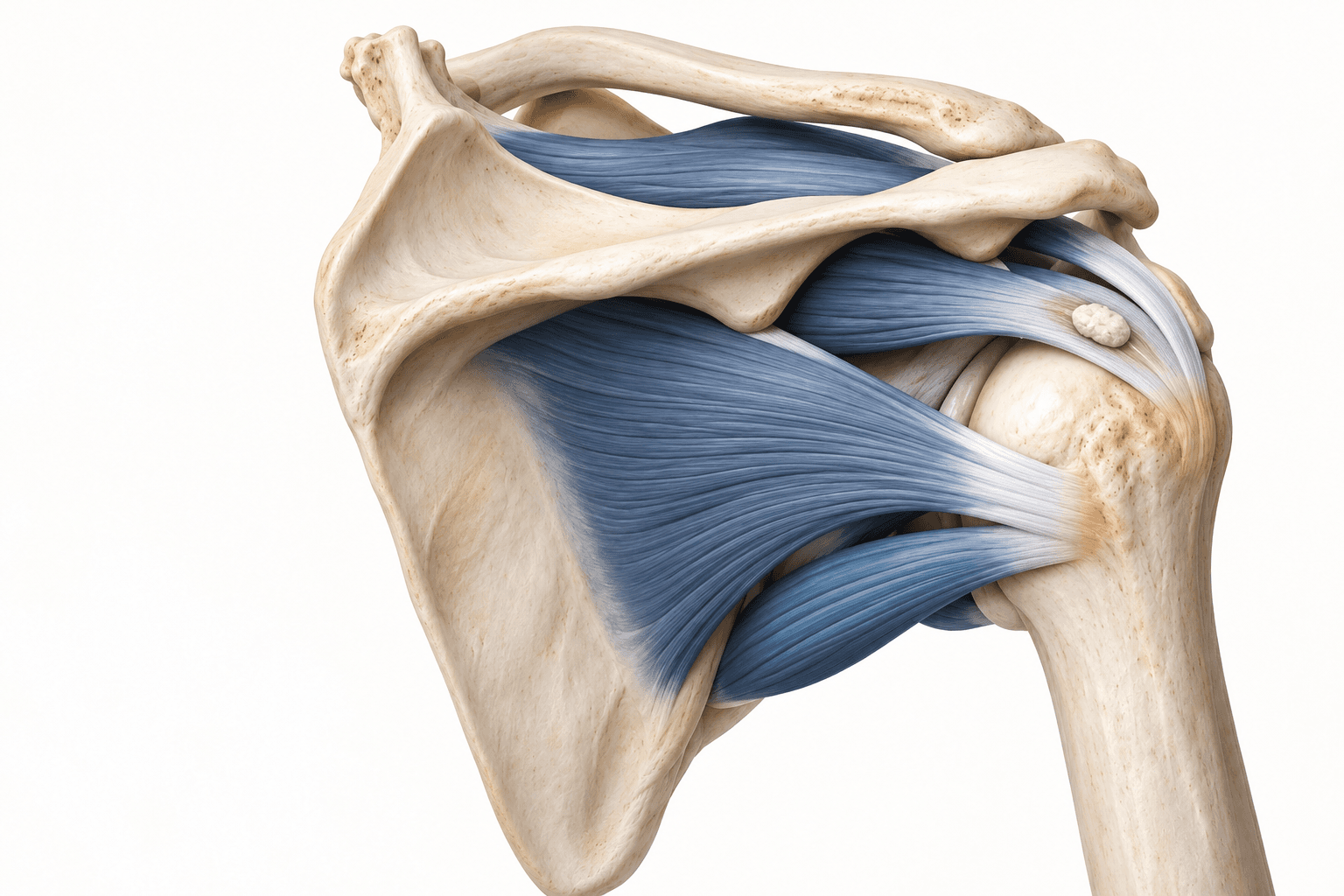
- Symptom
Shoulder pain or stiffness
What you feel and what brings you to an evaluation.
- Tissue
Rotator cuff tendon
The tendon is the location named in calcific tendinopathy.
- Finding
Calcium deposit
X-ray or ultrasound may show a deposit; a clinician interprets it alongside the examination.
When to get medical care first
See the full safety checklist
- If you have sudden pressure or crushing shoulder pain, especially if it spreads from the chest to your jaw, arm or neck, or comes with shortness of breath, dizziness or sweating, call 911. Sudden shoulder pain can sometimes be a sign of a heart attack.
- After a severe injury, if the shoulder is very painful, swollen, bruised or bleeding, go to the nearest emergency room.
- Contact a medical professional if shoulder pain comes with fever, swelling or redness; if it is very painful even when you or someone else moves the shoulder for you; or if the skin around it turns red or blue.
- If you are unsure what is causing your symptoms, ask a medical professional. Information online is not a diagnosis.
The visit
What an evaluation may look at
An evaluation connects what you feel with what the shoulder can do and any imaging already available.
- How symptoms began and which movements, positions or sleep postures are difficult.
- Shoulder motion, strength and tolerance for reaching.
- Whether another shoulder problem could better explain the presentation.
- Whether medical assessment or imaging such as an X-ray or ultrasound may be appropriate.
If you have an imaging report, bring it together with a short timeline of your symptoms.
After evaluation
Approaches a plan may include
The mix depends on the evaluation, the irritability of your symptoms and what you need to return to. A plan may include:
Request an appointment
Send a request and we will contact you by the next business day. Submitting a request does not confirm an appointment; your appointment is confirmed only after the clinic responds.