
Plantar Fasciitis
The plantar fascia is a thick band of tissue along the bottom of your foot. It runs from the heel toward the toes. Plantar fasciitis is the name commonly used for pain where this tissue attaches near the heel. You may also hear it called plantar heel pain.
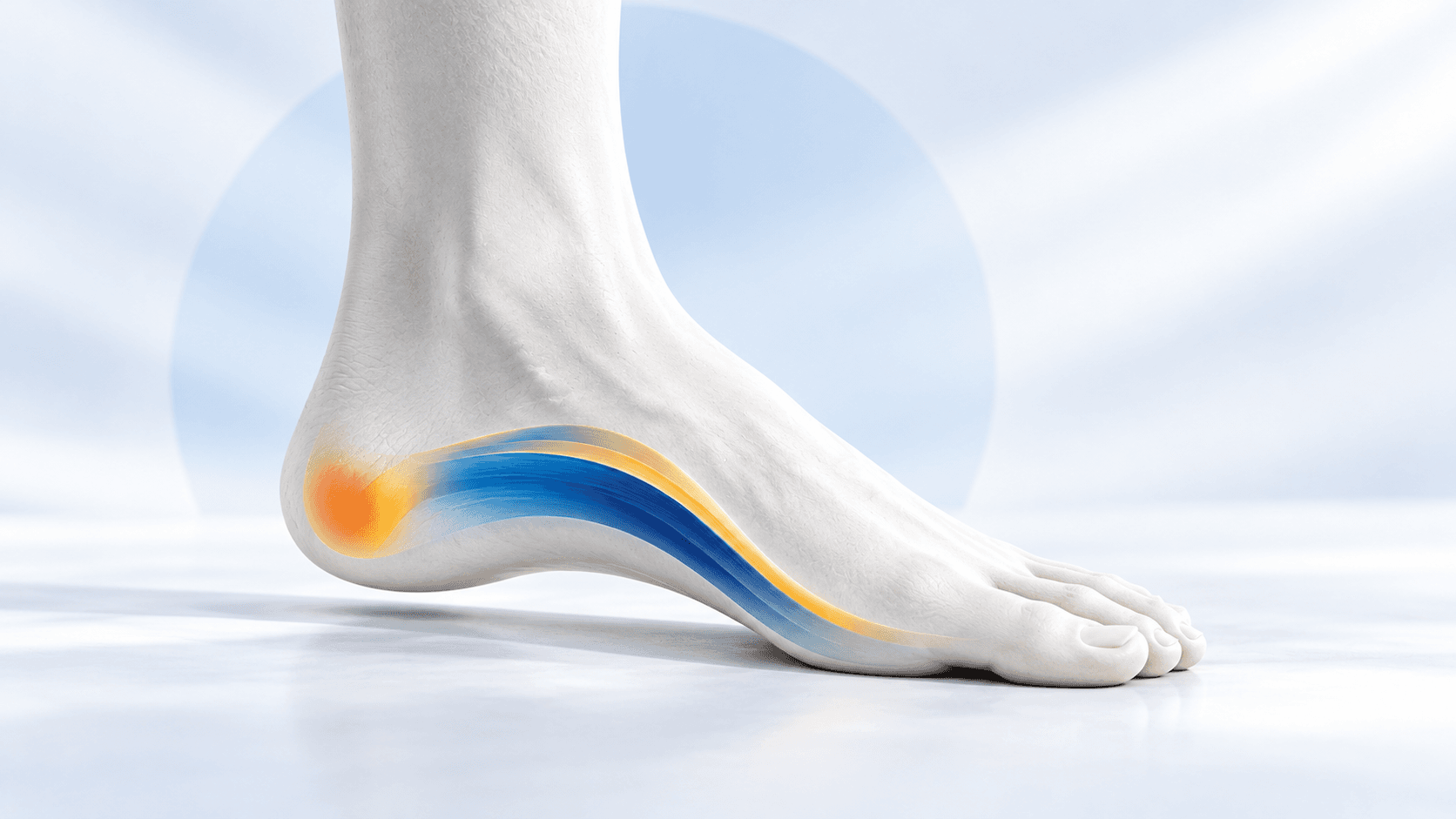
An outline of the foot, with a pressure path along the sole picked out from heel to forefoot
Symptoms often linked to plantar fasciitis
- First steps
Pain that is most noticeable with your first steps after getting out of bed or after sitting for a while.
- After standing or walking
Pain that can also build after long periods of standing or walking.
- Location
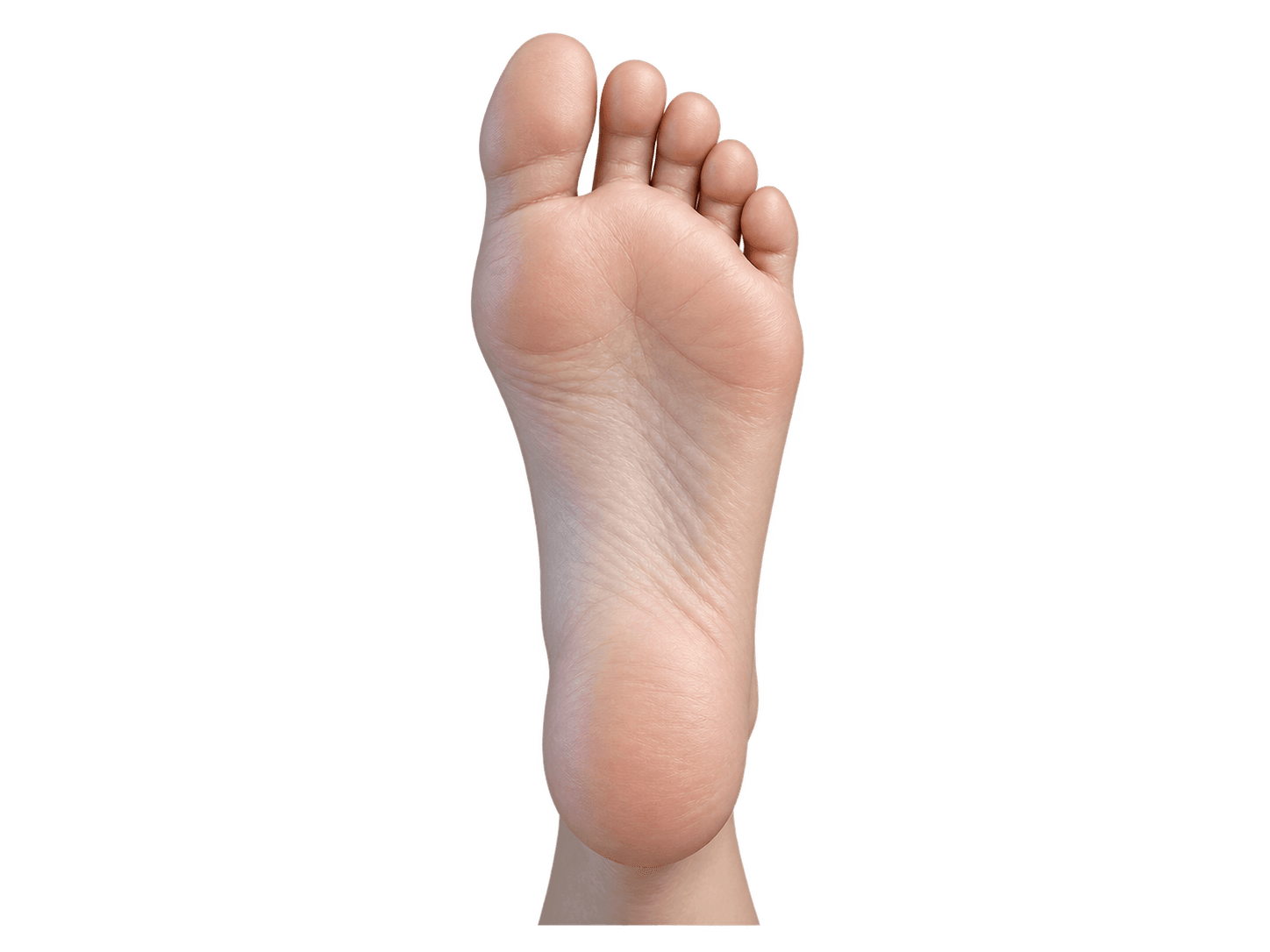
Pain on the bottom of the heel, often toward the inner side.
Heel pain has other possible causes
Not all heel pain is plantar fasciitis. An evaluation checks for other possible sources, such as an irritated nerve or a stress injury to the heel bone, before settling on an explanation. That is part of why an evaluation asks about more than the heel. A heel spur is a calcium deposit that may form where the band of tissue meets the heel bone when plantar fasciitis has gone untreated for a long time. A spur is usually the result of the problem and not the cause of the pain.
Pain in the cord-like tendon above the back of the heel is a different topic, covered on our Achilles tendon page.
When to get medical care first
See the full safety checklist
- After a fall or other injury, if it is hard to put weight on your foot or a bone is tender to touch, contact a medical professional promptly.
- If you felt or heard a pop at the back of your ankle and now have severe pain or swelling near the heel, cannot walk on that leg, or cannot rise onto your toes, seek urgent medical evaluation.
- If you are unsure what is causing your heel pain, ask a medical professional. Information online is not a diagnosis.
How a physical therapist may evaluate heel pain
A Physical Therapy evaluation for heel pain may include:
- questions about when the pain started, when it is worst and what you do on your feet each day;
- pressing gently to find exactly where it is tender;
- checking how your ankle, foot and toes move, including calf flexibility;
- looking at strength, and at how you stand and walk; and
- checking for signs that point to a different cause.
Before your visit, it can help to notice when your heel hurts most, such as first thing in the morning, after sitting or after a long day on your feet, and to share that at the evaluation.
How Physical Therapy may fit
Exercise is one of several approaches. A Shanti physical therapist uses the evaluation to decide what, if anything, belongs in your plan.
Depending on the findings, a plan may use some, all or none of these approaches:
For three educational movement examples, and the safety limits that go with them, read our guide to exercises for plantar fasciitis and heel pain.
Request an appointment
Send a request and we will contact you by the next business day. Submitting a request does not confirm an appointment; your appointment is confirmed only after the clinic responds.