
Shoulder topic 03
Rotator Cuff Problems
The rotator cuff is a group of muscles and tendons that helps position and stabilize the upper arm. Irritation or tendinopathy describes a different tissue problem from a partial or complete tear; symptoms alone cannot reliably tell them apart.
Orientation
What may bring someone to an evaluation
Rotator-cuff-related problems may be discussed when there is:
- Pain with lifting, reaching or lowering the arm
- Pain at the front or side of the shoulder, sometimes extending into the upper arm
- Weakness or difficulty with an activity that used to feel manageable
- A change after a fall, forceful pull or other injury
These features overlap with other shoulder conditions and do not identify a tear.
Term by term
Irritation is not the same as a tear
The words describe different findings. A clinician combines history, examination and—when indicated—imaging.
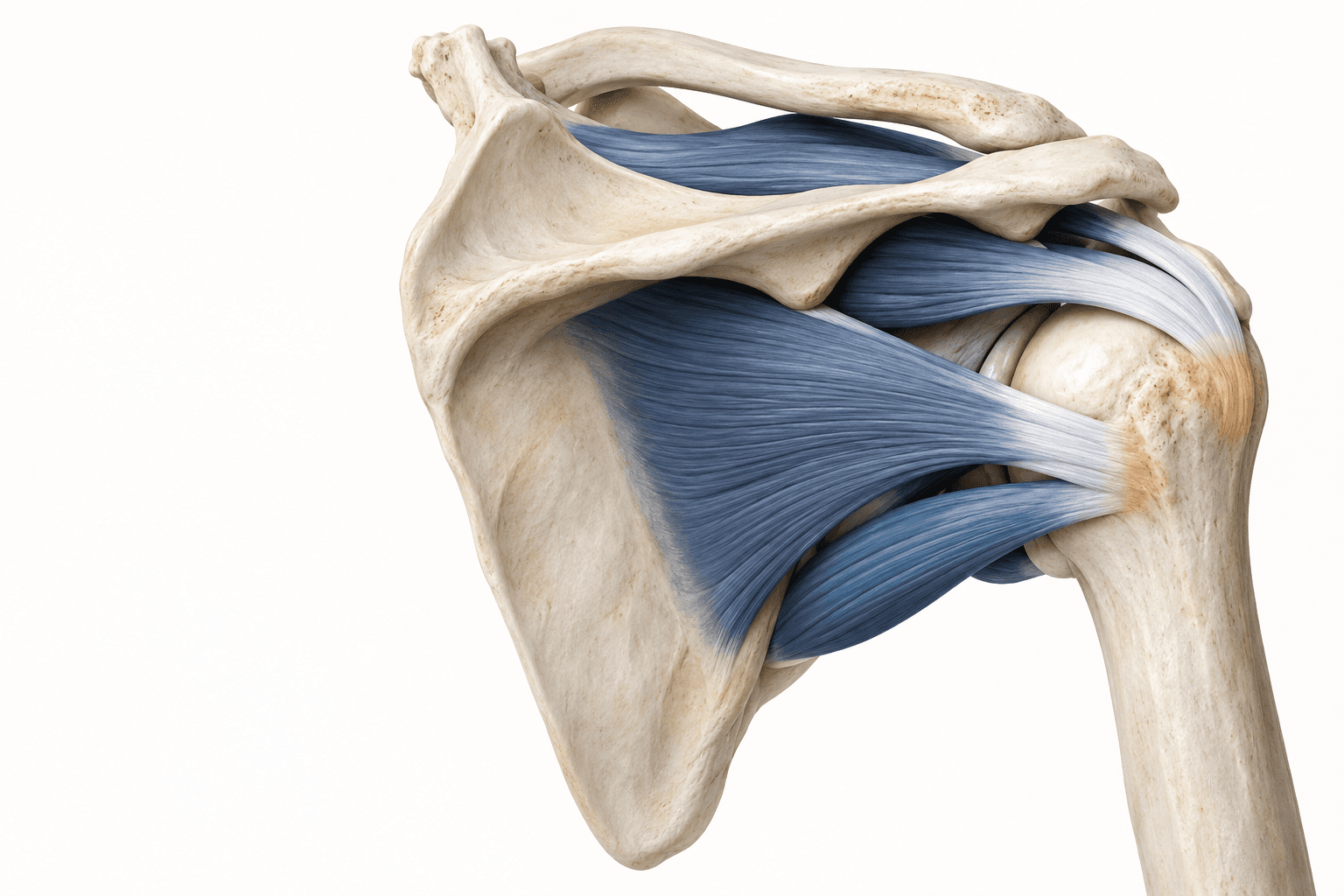
- Tendon term
Irritation or tendinopathy
The tendon is painful or has changed, without the term itself meaning that it is torn.
- Structural term
Partial tear
Only part of the tendon thickness is disrupted.
- Structural term
Full-thickness tear
The disruption extends through the tendon thickness. Size and function still need clinical context.
When to get medical care first
See the full safety checklist
- After a fall or other injury, get prompt medical care if the shoulder looks out of place, you cannot lift the arm, or pain and weakness began suddenly.
- If you have sudden pressure or crushing shoulder pain, especially if it spreads from the chest to your jaw, arm or neck, or comes with shortness of breath, dizziness or sweating, call 911. Sudden shoulder pain can sometimes be a sign of a heart attack.
- After a severe injury, if the shoulder is very painful, swollen, bruised or bleeding, go to the nearest emergency room.
- Contact a medical professional if shoulder pain comes with fever, swelling or redness; if it is very painful even when you or someone else moves the shoulder for you; or if the skin around it turns red or blue.
- If you are unsure what is causing your symptoms, ask a medical professional. Information online is not a diagnosis.
The visit
What an evaluation may look at
An evaluation looks at the story of the problem as well as movement and strength.
- Whether symptoms began gradually or followed an injury.
- Active and guided shoulder motion, strength and control during reaching.
- Neck and shoulder-blade movement when relevant.
- Whether a medical referral or imaging may help answer a structural question.
Note any sudden loss of strength, night symptoms, injury details and the tasks you need the arm to do.
After evaluation
Approaches a plan may include
The mix depends on the evaluation, the irritability of your symptoms and what you need to return to. A plan may include:
Request an appointment
Send a request and we will contact you by the next business day. Submitting a request does not confirm an appointment; your appointment is confirmed only after the clinic responds.