
Pain that buildsKnee topic
Patellofemoral Pain (Kneecap Pain)
Patellofemoral pain is pain under or around the kneecap, at the front of the knee.
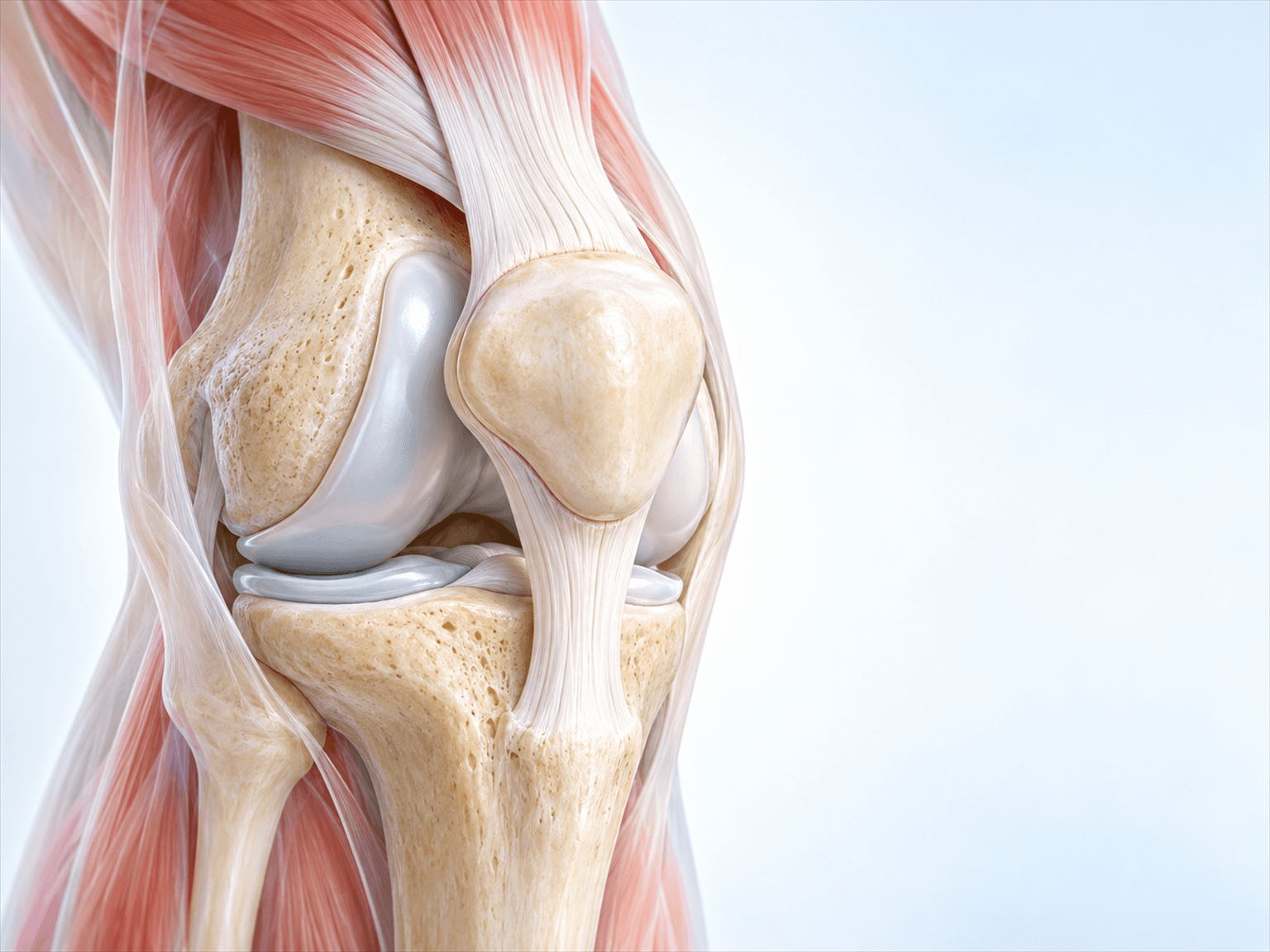
- KneecapPatella is the medical name for the kneecap.
- Thigh boneThe femur forms the upper part of the joint.
- Shin boneThe tibia forms the lower part of the joint.
What it is
It is also called patellofemoral syndrome or runner's knee. Chondromalacia patella is another name sometimes used. Read more on chondromalacia patella.
What may help
This is general information, not a plan for any one person.
What a plan may include
- Exercise for the hip and thigh muscles is usually the center of a plan.
- Stretching the front and back of the thigh, and strengthening the core muscles, can be part of it.
- Taping or shoe inserts may be used alongside exercise.
- Coordination training and a gradual return to activity can follow.
Everyday adjustments
- Changing how you exercise.
- Building activity up gradually.
- Wearing proper sports shoes.
Rest on its own tends to ease it only for a while.
How it is described
People describe:
- Pain on stairs or hills, during sports, with deep squatting, or after sitting a long time with the knee bent.
- A dull, aching pain behind, below or beside the kneecap.
- Grinding when the knee bends.
- Pain that is worse with deep knee bends, stairs and running downhill.
What may contribute
Several things may play a part:
- Increasing activity faster than the knee can adapt.
- Weak or tight thigh muscles.
- Focusing on a single sport.
- A kneecap that does not move smoothly.
- Overuse.
What an evaluation may look at
An evaluation may include:
- Analyzing the movements that cause pain and ruling out other conditions.
- Possibly looking at how you walk or run, and testing hip and thigh strength.
- Imaging is usually not needed to diagnose it. A physical therapist may consult an orthopedic (bone and joint) physician, who may order imaging.
How Physical Therapy may fit
A Shanti physical therapist begins with an evaluation. If Physical Therapy looks like a good fit, the plan is built around what the evaluation shows. Depending on the findings, a plan may use some, all or none of these approaches:
Safety note
When to seek medical care
Seek urgent medical care after a serious injury if you cannot put weight on the leg, or if the leg or joint looks deformed. Contact a medical professional for severe or worsening symptoms, fever, or concerns after an operation.
See the full safety checklist
When to get medical care first
Get emergency care right away if:
- you cannot put weight on the knee after an injury;
- your knee looks deformed;
- your calf or foot has numbness, tingling or a bluish color;
- your foot feels cool or looks blue after a knee injury. This can mean the knee has come out of joint, which is an emergency.
Contact a medical professional promptly if:
- your knee buckles, clicks or locks;
- your knee is still painful after 3 days of home treatment;
- the pain is severe;
- you have trouble bending or straightening the knee;
- you have a fever;
- your knee is red or warm;
- your knee is heavily swollen;
- your calf hurts or swells;
- an activity keeps bringing on knee pain. Get it checked before it gets worse.
Also contact a medical professional about:
- a knee that feels unstable;
- swelling.
If you are unsure what is causing your symptoms, ask a medical professional. Information online is not a diagnosis.
Request an appointment
Send a request and we will contact you by the next business day. Submitting a request does not confirm an appointment; your appointment is confirmed only after the clinic responds.