
Head and neck guide
Neck Pain at Your Desk: What to Note Before Your Appointment
Long days at a screen can leave your neck stiff or sore. This guide covers how desk work can be linked with neck pain, a few workstation checks, gentle movements for the workday, and a short list to bring to your appointment. It is general education, not a diagnosis.
On this page
How desk work can be linked with neck pain
A common cause of neck pain is muscle strain or tension, and everyday activities are often to blame. Examples include bending over a desk for a long time, often an hour or more, and working with a computer screen set too high or too low.
Sitting at a desk for a long time with an awkward posture is another, and health guidance advises against keeping your neck in the same position for long stretches.
Noticing a link with your desk does not tell you what is causing your pain. Neck pain can involve the muscles, joints, discs or nerves of the neck, and sorting that out takes an evaluation.
Quick checks at your workstation
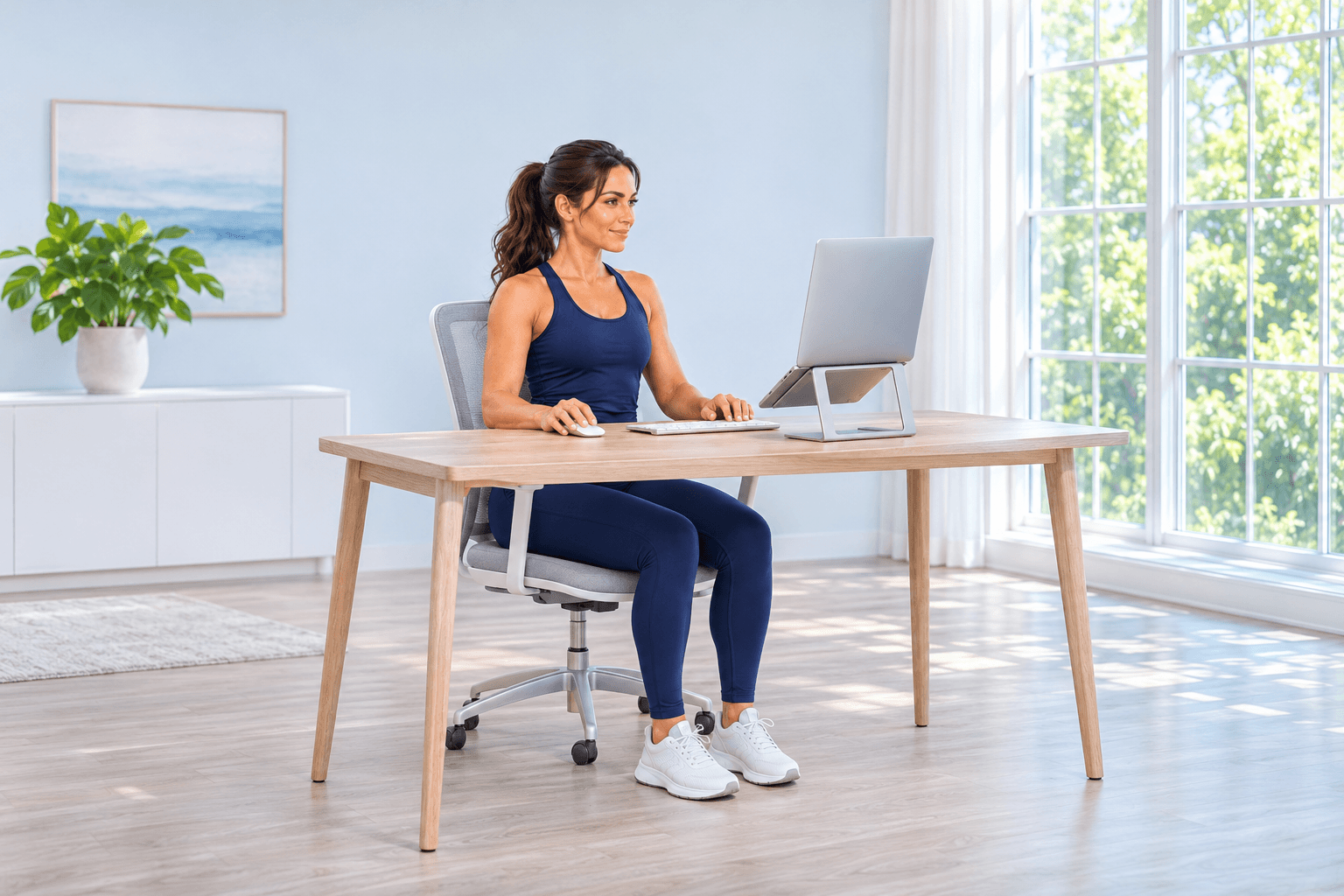
Workplace safety guidance for screen work describes a standard setup. It is a useful starting point to compare against, not a treatment for pain:
- The top of the screen roughly level with your eyes, about an arm's length away.
- The screen and keyboard straight in front of you, so you are not twisting to see or type.
- Shoulders relaxed, with the keyboard just below elbow height and the mouse in line with your elbow.
- On a laptop you use for long stretches, a separate keyboard and mouse so the screen can be raised on a stand.
Even a good setup is not meant to be held all day, which is where breaks come in.
Break up long stretches at the screen
Workplace guidance favors short, frequent breaks over longer, less frequent ones: for example, 5 to 10 minutes every hour rather than 20 minutes every 2 hours.
During a break, get up and move around, or at least stretch and change position: take a call standing up or walk to refill your water. Our guide to desk work and your back walks through changing position across a working day.
Gentle neck movements for the workday
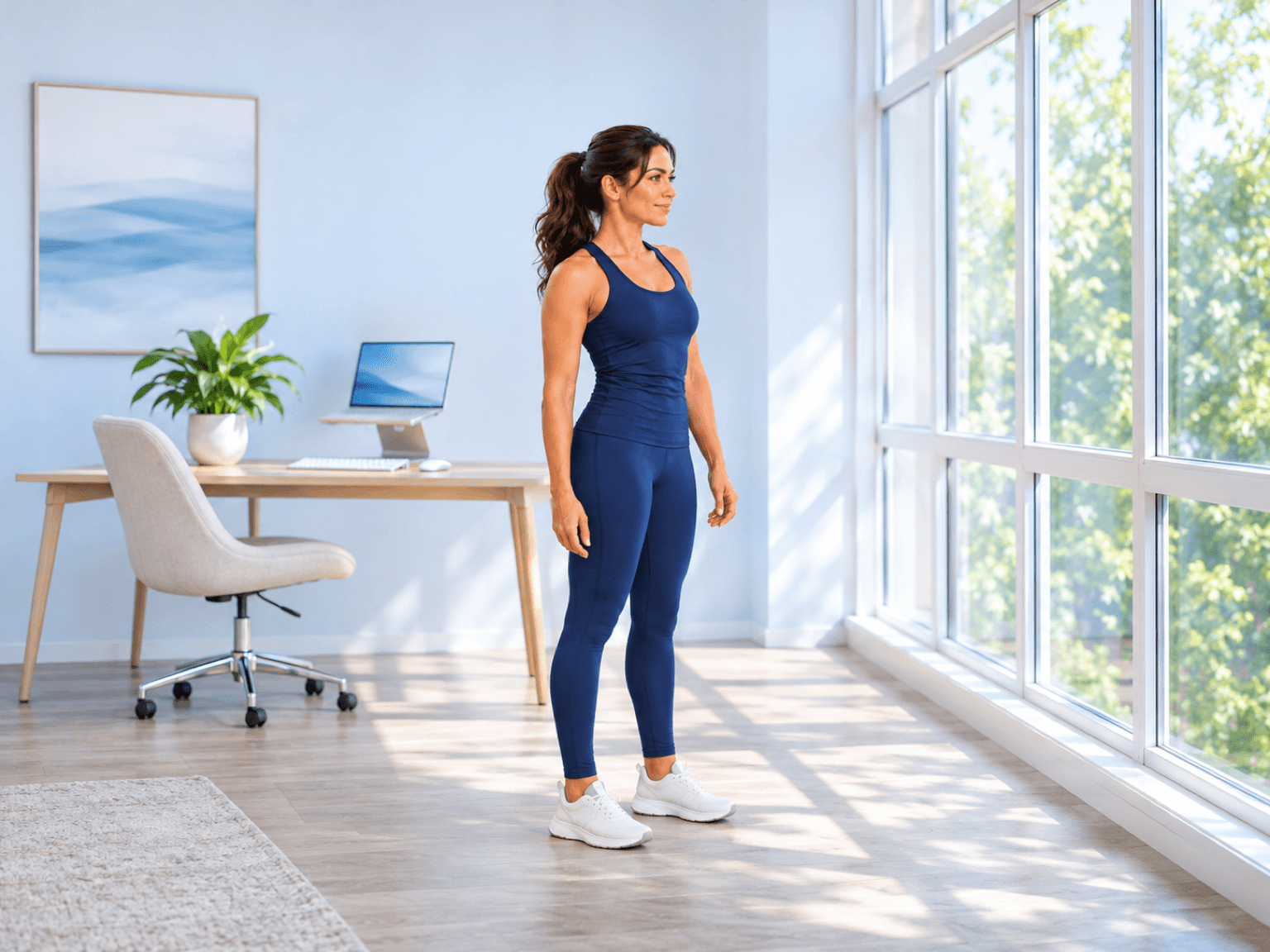
The movements below are educational examples chosen by our physical therapist, two of them from NHS exercise guides. They are not a treatment plan, and they may not be right for you. Whether to do them at all, and how much and how often, depends on your own evaluation. If you try them, use a steady chair without wheels, with your feet flat on the floor.
Neck rotation
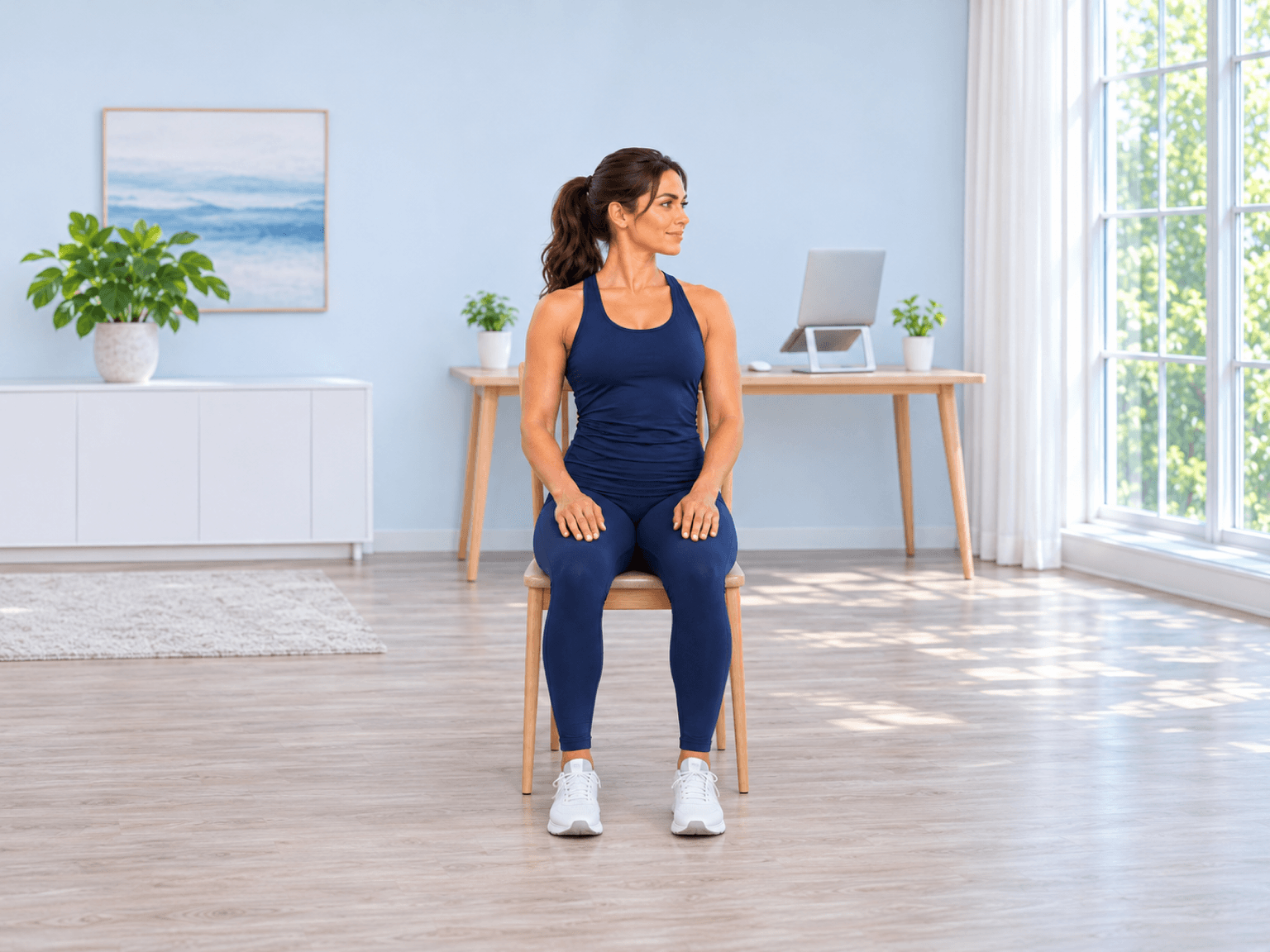
The neck, turning to each side.
Sit upright with your shoulders down and look straight ahead. Slowly turn your head toward one shoulder as far as is comfortable, pause, then return to the start. Repeat toward the other side.
Levator scapulae stretch
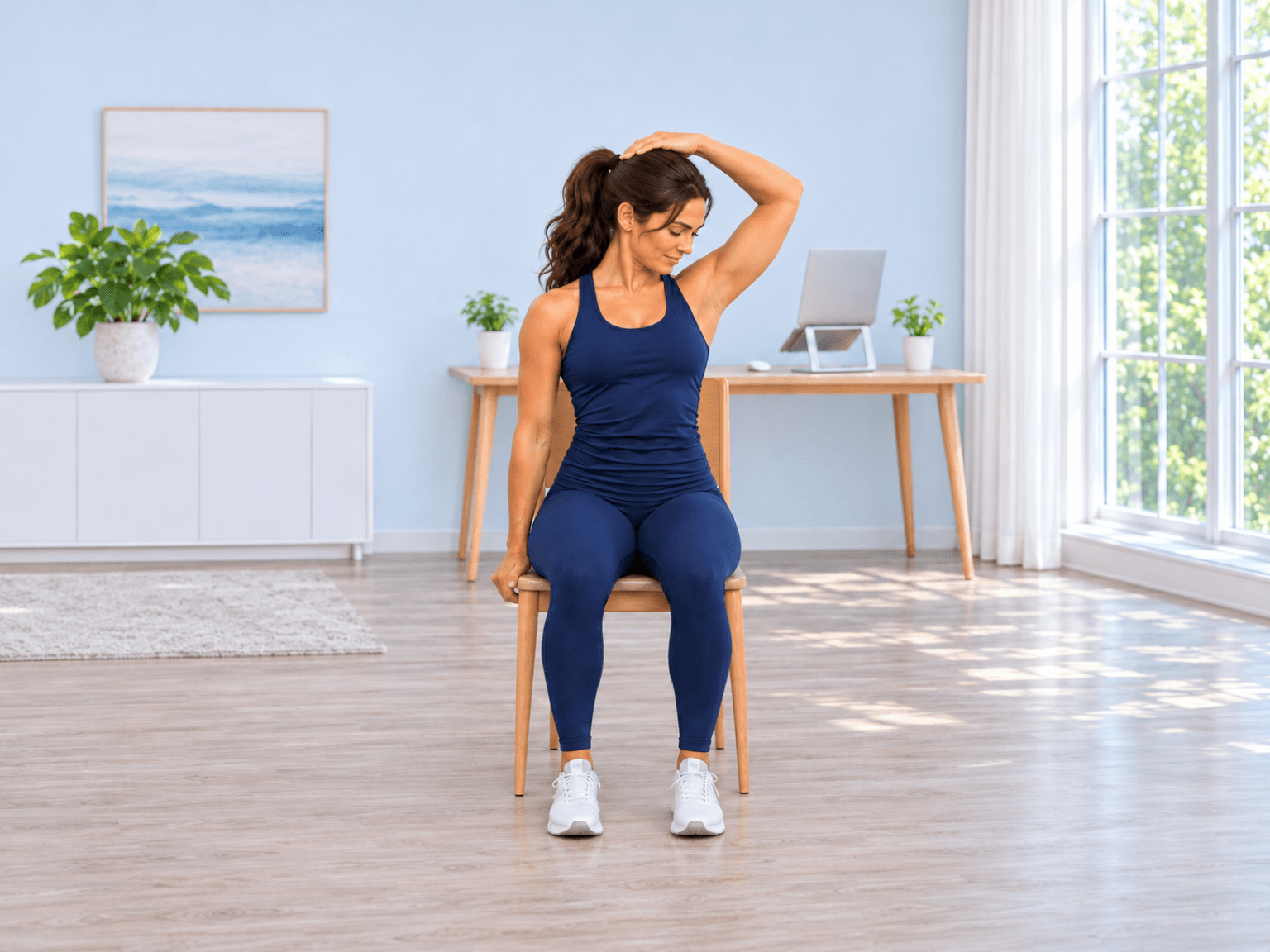
The back and side of the neck, toward the shoulder blade.
Sit upright and hold the right side of the chair seat with your right hand. Turn your head to the left and tip it down, as if looking at your left pocket. Rest your left hand on top of your head and gently pull to add a little stretch. Return to the start, then switch sides.
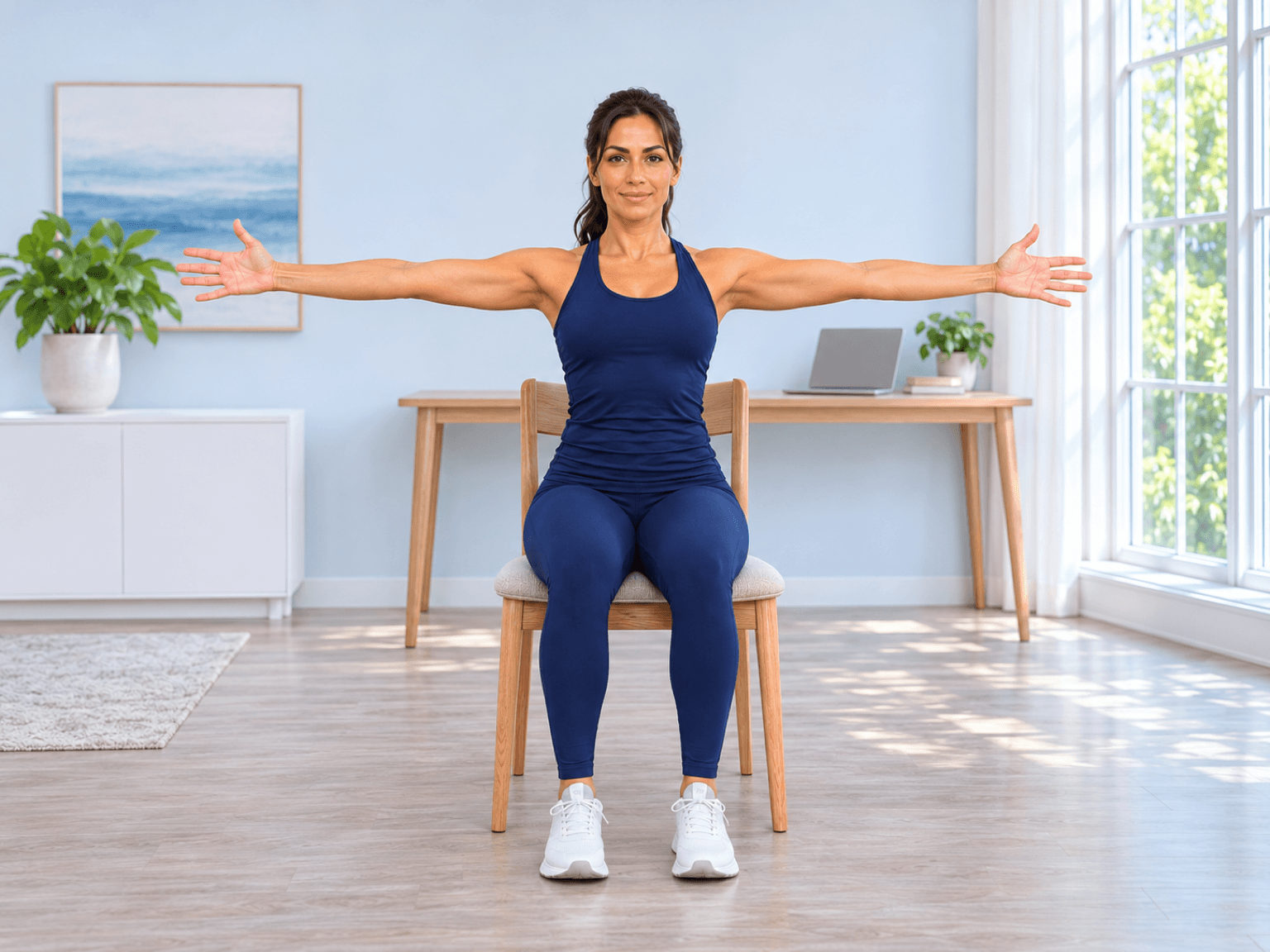
Chest stretch
The chest. NHS describes it as a stretch that is good for posture.
Sit upright, away from the back of the chair, and pull your shoulders back and down. Stretch your arms out to the sides, then gently push your chest forward and up until you feel a stretch across your chest.
How much and how often: set by your physical therapist.
What to note before your appointment
Before your appointment, it can help to jot down:
- When the pain started, and whether it came on suddenly, gradually or after a particular change.
- Where you feel it, and whether anything travels into your shoulders, arms or hands, including numbness or tingling.
- What makes it better or worse, and the time of day it is worst.
- What a typical work stretch looks like: how long you sit, how your screen is set up and how often you get up.
- What the pain is making hard to do, at work or at home, and what you would like to be able to do again.
- Anything you have already tried, and how it went.
- The questions you want to ask.
Bring the list with you, on paper or on your phone.
How Physical Therapy may fit
A Shanti physical therapist begins with an evaluation. If Physical Therapy looks like a good fit, the plan is built around what the evaluation shows and the activities you want to return to.
Our neck pain page explains what an evaluation may look at, including how your neck moves, your posture, strength and sensation.
Shanti has clinics in Edison and East Windsor, New Jersey.
When to see a medical professional
Contact your doctor or another medical professional soon if you have neck pain with:
- numbness, tingling or weakness in an arm or hand;
- a recent fall, concussion or other injury;
- trouble walking or balancing, or loss of bladder or bowel control; or
- difficulty swallowing.
If neck pain wakes you at night or has not improved after a week of self-care, it is a good time to have it checked.
When to call 911
Call 911 if you have neck pain with:
- shortness of breath, sweating, or arm or jaw pain; or
- a fever and headache, with a neck too stiff to touch your chin to your chest.
Educational information only; it does not replace an individual evaluation.
Request an appointment
Send a request and we will contact you by the next business day. Submitting a request does not confirm an appointment; your appointment is confirmed only after the clinic responds.