
Foot and ankle guide
Shin Splints After Running: What Helps and When to Get It Checked
Shins that ache during or after a run are common, especially after a change in training. This guide covers how shin splints are often described, common training triggers, other causes of shin pain, gentle movements, easing back into running and a short list to bring to your appointment. It is general education, not a diagnosis.

On this page
What shin splints are
"Shin splints" is the everyday name for pain along the inner edge of the shinbone (tibia). The medical name is medial tibial stress syndrome.
It is an overuse problem: the muscles and bone tissue of the lower leg are overworked by repeated activity. Runners have the highest risk, and dancers and military recruits are also often diagnosed with it.
How shin splints often feel
People with shin splints often describe:
- a sharp or dull, aching pain along the shin, in one or both legs;
- pain when pressing on the sore area;
- pain during and after exercise that eases with rest; and
- mild swelling in the area.
Early on, the pain may show up at the start of exercise and fade as you keep going. Over time it can come on both during and after exercise.
Common training triggers
Shin splints often follow a change in training. Common triggers and risk factors include:
- running more often, such as adding days to your week;
- running longer, or harder, such as adding hills after running only on flat ground;
- starting to exercise again after a break, or being new to running;
- running on hard surfaces, such as roads and sidewalks;
- worn-out shoes, or shoes that are not right for the activity; and
- flat feet or very rigid arches.
Knowing what changed is useful to share at your appointment, but it does not tell you what is causing your pain.
Not all shin pain is shin splints
Other problems can cause pain in the same area, including a stress fracture, tendinitis and chronic exertional compartment syndrome. Telling them apart takes an examination, and sometimes imaging or other tests.
A stress fracture is a small crack in the bone caused by repeated stress. Signs that point toward a bone stress injury include discomfort in one specific spot on the bone, pain with regular walking or daily activities, limping, and aching while lying in bed at night.
In chronic exertional compartment syndrome, pressure builds in the leg muscles during exercise. The pain or cramping usually goes away soon after you stop.
Easing off while you wait to be seen
General guidance for shin splints includes:
- Take a break from the activity that brings on the pain, rather than running through it.
- If it is pain-free, switch to lower-impact activity, such as swimming, cycling or an elliptical machine.
- Use a cold pack wrapped in a towel for up to 20 minutes at a time. Do not put ice directly on your skin.
If you notice any of the signs of a bone stress injury above, see a medical professional as soon as possible rather than waiting for it to settle.
Gentle movements for the lower leg and foot
The movements below are educational examples from NHS exercise guides and physical therapist guidance on shin splints. They are not a treatment plan, and they may not be right for you. Whether to do them at all, and how much and how often, depends on your own evaluation. For the seated movements, use a steady chair without wheels.

Calf stretch
The calf muscles at the back of the lower leg.
Stand facing a wall with your hands on it for support. Bend your front knee and step the other leg back at least a foot's length, keeping that leg straight and both feet flat on the floor. Keep the back heel down to feel the stretch in that calf, then switch legs.
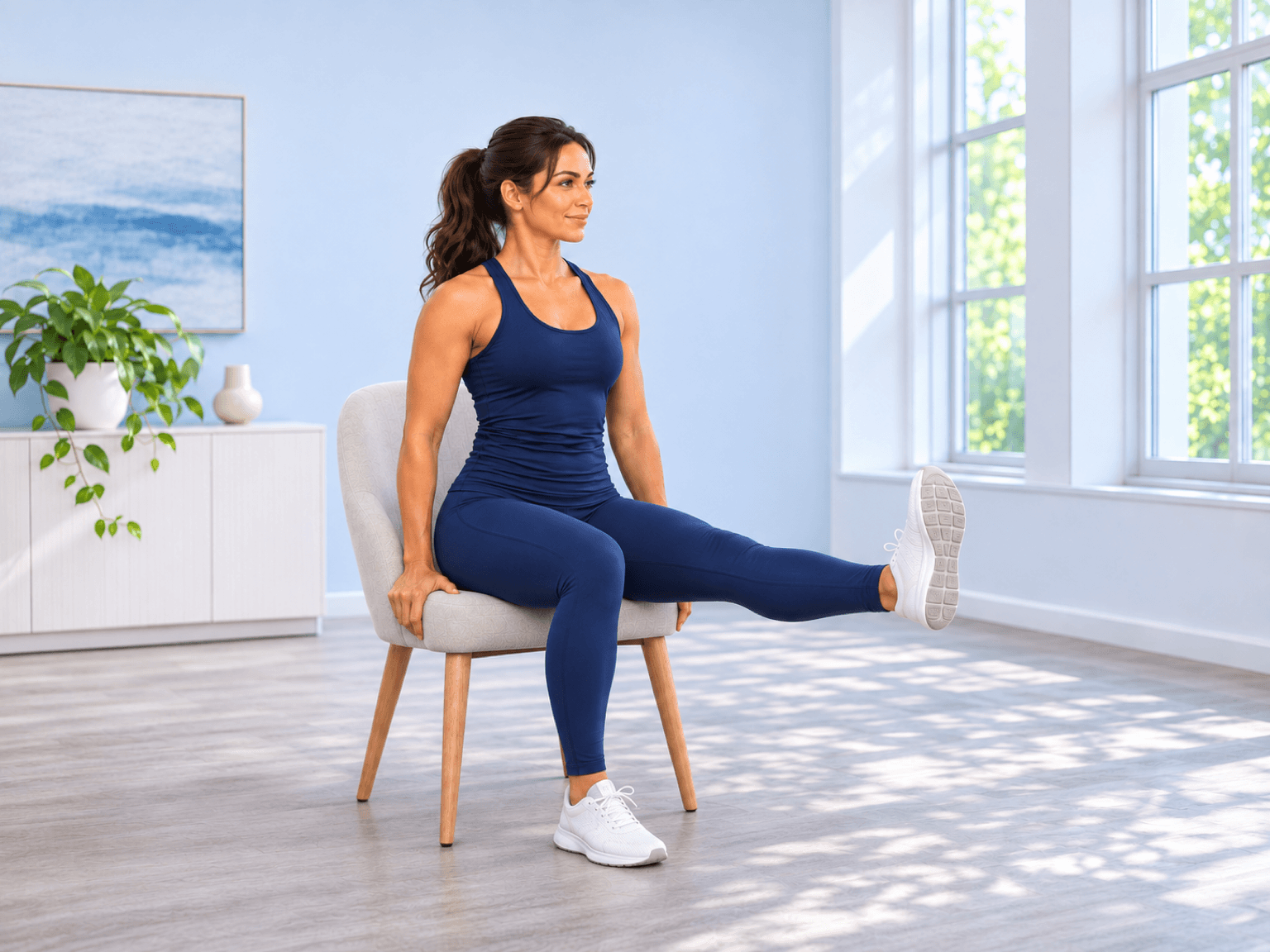
Seated ankle stretch
The ankle, pointing the foot away and pulling it back.
Sit upright and hold the sides of the chair. Straighten one leg with the foot off the floor. Point your toes away from you, then pull them back toward you. Repeat with the other foot.
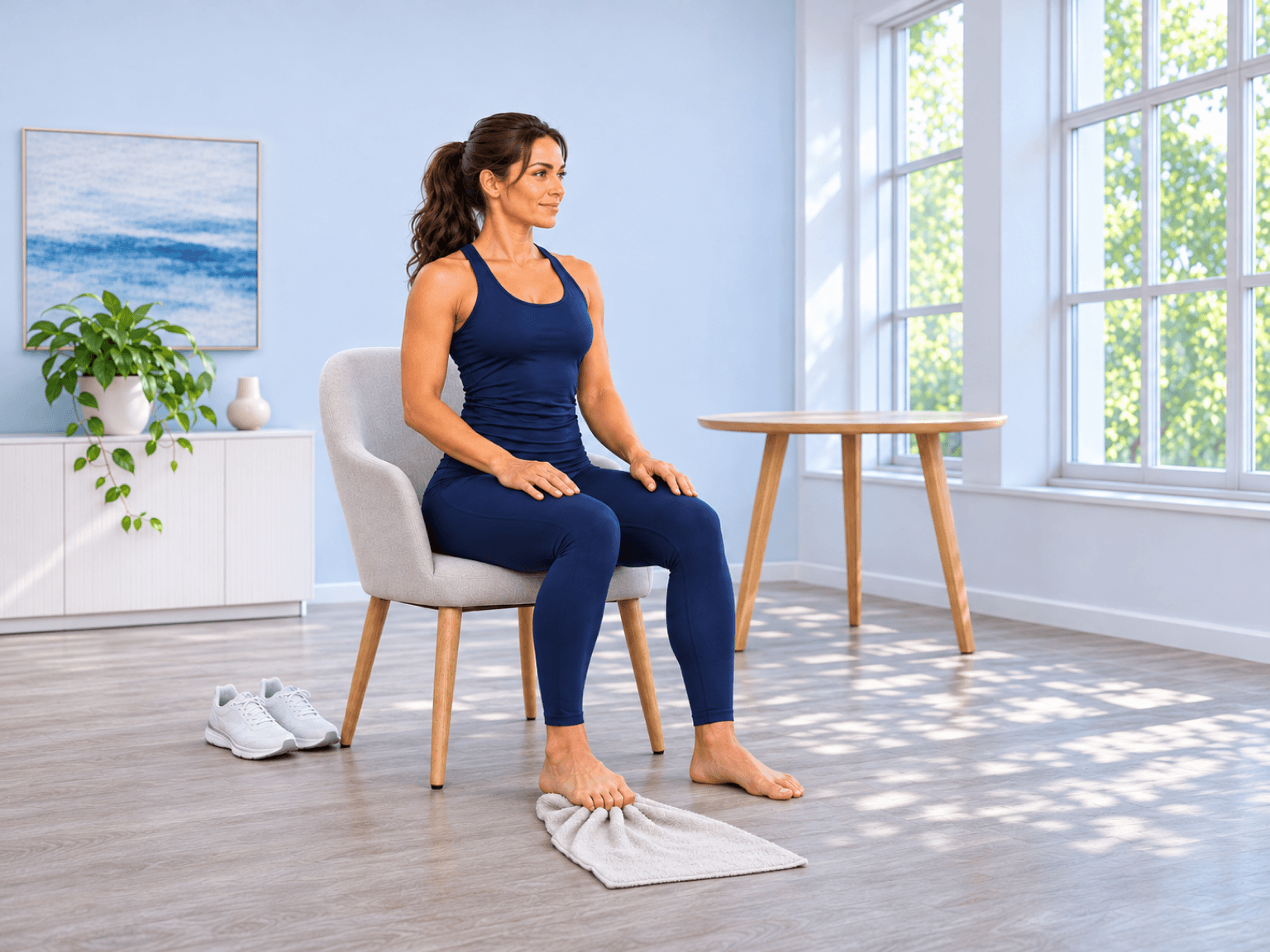
Towel scrunch
The muscles in the arch of the foot.
Sit with your feet flat on the floor and a small towel under one bare foot. Use your toes to pull the towel toward you. Spread the towel flat again and switch feet.

Calf raises
The calf muscles, working to lift your heels.
Stand behind a steady chair and rest your hands on the back of it for support. Slowly lift both heels off the floor as far as is comfortable, then lower them with control.

One-leg stand
Balance on one leg.
Stand facing a wall with your arms out in front and your fingertips touching the wall. Lift one foot off the floor and hold it there briefly, keeping your hips level and a slight bend in the standing knee. Gently place the foot back down and switch sides.
How much and how often: set by your physical therapist.
Easing back into running
Guidance for shin splints suggests being pain-free for at least two weeks before returning to your usual exercise. When you go back:
- start with shorter, slower and fewer runs than before, and build up gradually;
- if the same pain comes back, stop and rest;
- run on softer surfaces, such as a track, grass or dirt paths, when you can;
- wear shoes suited to running, and replace them when they wear out; and
- mix in lower-impact exercise, such as swimming or cycling.
If you have been told you have a stress fracture or another injury, follow the return plan your medical professional gives you instead.
What to note before your appointment
Before your appointment, it can help to jot down:
- Where it hurts: along the inner edge of the shin or in one specific spot, and in one leg or both.
- When it hurts: at the start of a run, during, after, when walking or at night.
- What changed before it started: distance, days per week, pace, hills, running surface or shoes.
- How old your running shoes are, and roughly how much you have run in them.
- Any past leg or foot injuries, including stress fractures.
- Whether your eating has kept up with your training.
- Anything you have already tried, and how it went.
- What you want to get back to, such as a race date, and the questions you want to ask.
Bring the list with you, on paper or on your phone.

How Physical Therapy may fit
A Shanti physical therapist begins with an evaluation. If Physical Therapy looks like a good fit, the plan is built around what the evaluation shows and the activities you want to return to.
For shin pain, an evaluation may include watching you walk and do the activities that bring on your symptoms, and checking your strength, flexibility and how you move. If something other than shin splints looks likely, your physical therapist may refer you to a physician for more tests.
Our foot and ankle page explains how to request an appointment at either clinic. Shanti has clinics in Edison and East Windsor, New Jersey.
When to see a medical professional
Contact your doctor or another medical professional as soon as possible if you have shin pain with:
- pain in one specific spot on the bone, pain with walking or daily activities, a limp, or aching at night;
- swelling in your lower leg that is getting worse, or a shin that is red and feels hot to the touch; or
- numbness, tingling or weakness in your leg or foot.
If the pain is severe, or began with an injury to your shin, get medical help the same day, for example at an urgent care center. If the pain has not improved after several weeks of rest, or you are not sure it is shin splints, it is a good time to have it checked.
When to get emergency care
Call 911 or go to the nearest emergency room if you have:
- severe leg pain that does not ease with pain medicine or raising the leg, especially after an injury or with a leg that feels tight or full; or
- leg pain or swelling together with chest pain, trouble breathing, coughing up blood or fainting.
Educational information only; it does not replace an individual evaluation.
Request an appointment
Send a request and we will contact you by the next business day. Submitting a request does not confirm an appointment; your appointment is confirmed only after the clinic responds.