
Back and pelvis topic
Sacroiliac (SI) Joint Pain
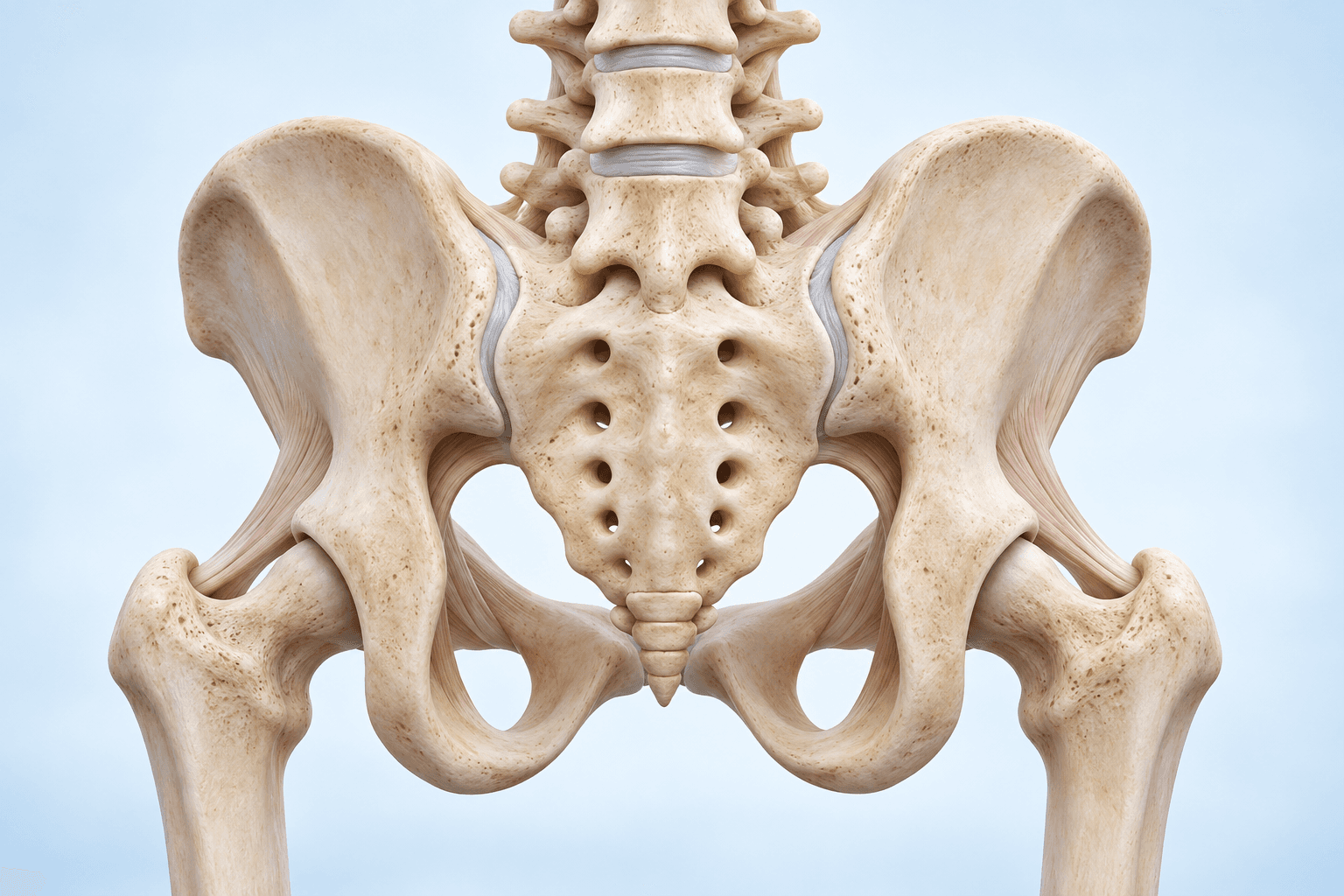
The sacroiliac joints sit between the sacrum at the base of the spine and the two sides of the pelvis.
What it is
Pain in this area can overlap with other low-back and hip problems, so location alone does not identify the cause.
What people may notice
People may describe pain on one side of the low back, pelvis, buttock, groin or tailbone. It may sometimes travel toward the knee.
- Standing up after sitting, turning in bed, bending or twisting
- Walking, standing or sitting for a long time
- Tightness or tenderness around the hip or buttock
What may be connected with it
- Stiffness or extra movement at one of the SI joints
- Differences in strength or coordination around the spine, pelvis and hips
- A fall, repeated irritation, a change in training or another hip or back problem
What Physical Therapy may involve
A plan is based on the evaluation. Depending on the findings, it may include some, all or none of the following:
- Education about movements, activities and positions that affect symptoms
- Exercises selected from the evaluation to address mobility, strength or control
- Movement and body-mechanics practice for work, home, exercise or sport
- Manual therapy or another approach when it fits the evaluation and plan
When to get medical care first
See the full safety checklist
Go to an emergency department right away if:
- Symptoms follow a serious fall, collision or other major injury
Contact a medical professional promptly if:
- Back or pelvic pain is severe or rapidly worsening
Contact a medical professional if:
- Pain is not improving or is stopping normal activities
- You are unsure whether the symptoms are coming from the back, pelvis or hip
If you are unsure what is causing your symptoms, ask a medical professional. Information online is not a diagnosis.
What an evaluation may look at
- How the symptoms started, where they are felt and which activities change them
- Walking, stairs, squatting, balance and transfers such as rising from a chair
- Movement and strength of the spine, pelvis and hips
- Whether another back, hip or medical problem needs to be considered first
How Physical Therapy may fit
A Shanti physical therapist begins with an evaluation. If Physical Therapy looks like a good fit, the plan is built around what the evaluation shows and the tasks you want to get back to. Depending on the findings, a plan may use some, all or none of these approaches:
- Therapeutic exercise
- Manual therapy
- Ergonomic evaluation and training
- Neuromuscular re-education
- Modalities
Request an appointment
Send a request and we will contact you by the next business day. Submitting a request does not confirm an appointment; your appointment is confirmed only after the clinic responds.